From early research into pedestrian behaviour to agent-based modelling (ABM) and modern simulation, our understanding of people movement has evolved dramatically. As we reflect on five decades of engineering software development, we explore how research and advances in computing have changed the way we understand the relationship between people and place. Drawing on the Santa Fe Institute's Agent-Based Modeling: Worlds Within Worlds, we consider how these ideas have evolved and how pedestrian simulation software such as Oasys MassMotion sits within that wider story.
Every person moving through a public space has their own destination. They make decisions, change direction and respond to the environment around them. Put thousands of those individual movements together and a complex system emerges. Understanding that relationship between people's behaviour and place has occupied researchers for decades.
Understanding people
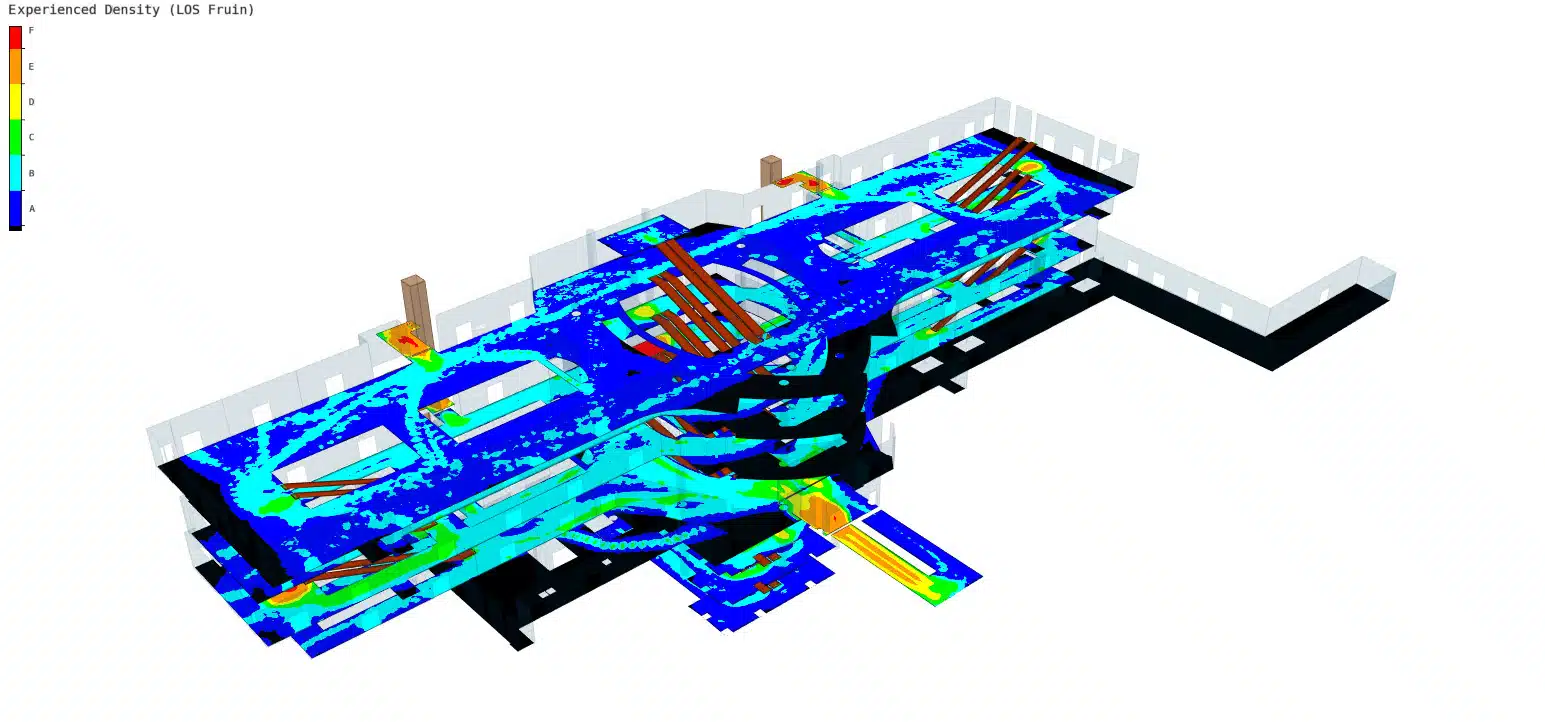
In 1971, John J. Fruin published Pedestrian Planning and Design, an influential work in pedestrian planning. Fruin related factors such as pedestrian density and movement speed to the comfort and safety of pedestrian environments, helping establish a quantitative foundation for analysing movement through spaces. His work introduced pedestrian Level of Service (LoS) and also investigated human dimensions and the influence of geometry on pedestrian movement.
It represented an important shift. Understanding people movement was becoming about more than how many people a space could accommodate. Researchers and designers could begin to examine the relationship between people, space and movement. As computing developed, those questions could increasingly be explored through simulation.
From simple rules to complex behaviour
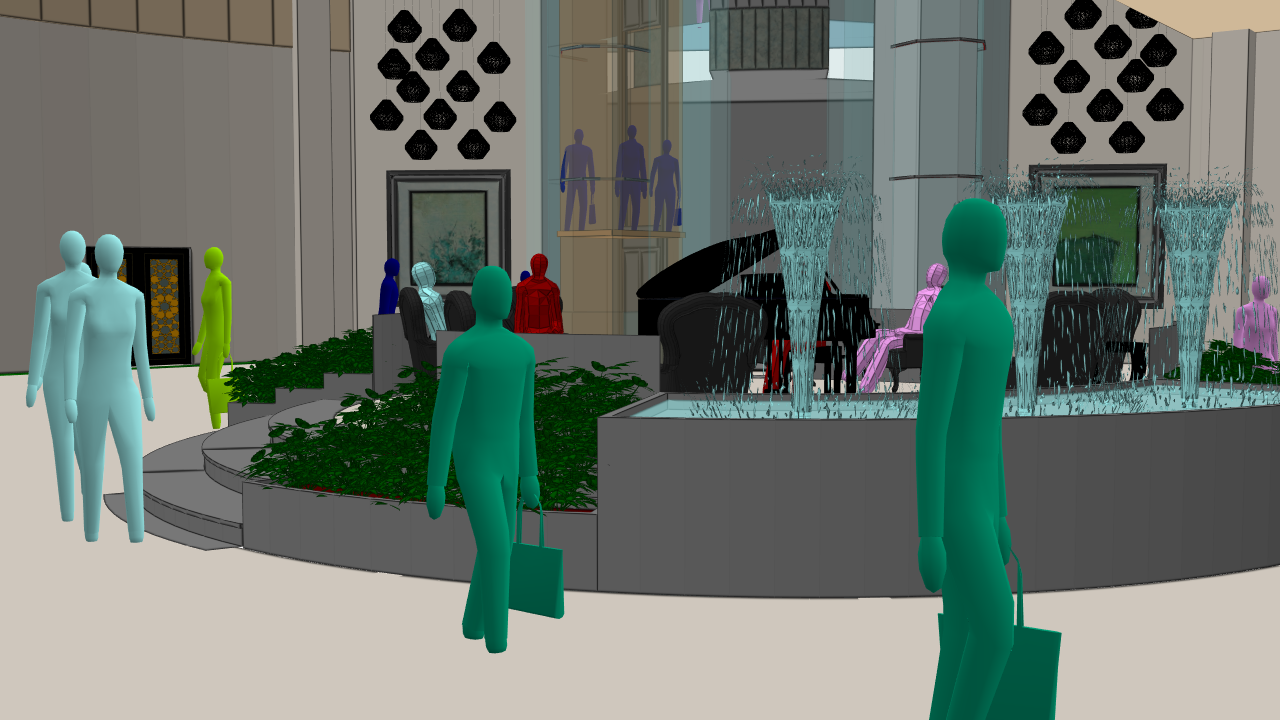
ABM approaches complexity from the individual upwards. Instead of beginning with the behaviour of an entire system, ABM represents individual actors and the rules governing their behaviour, then explores what emerges as they interact.
The Santa Fe Institute historical reflection traces the approach through decades of scientific and computational development, from early cellular automata to applications across complex social and economic systems. As computational power and access to data grew, researchers were able to explore increasingly sophisticated models.
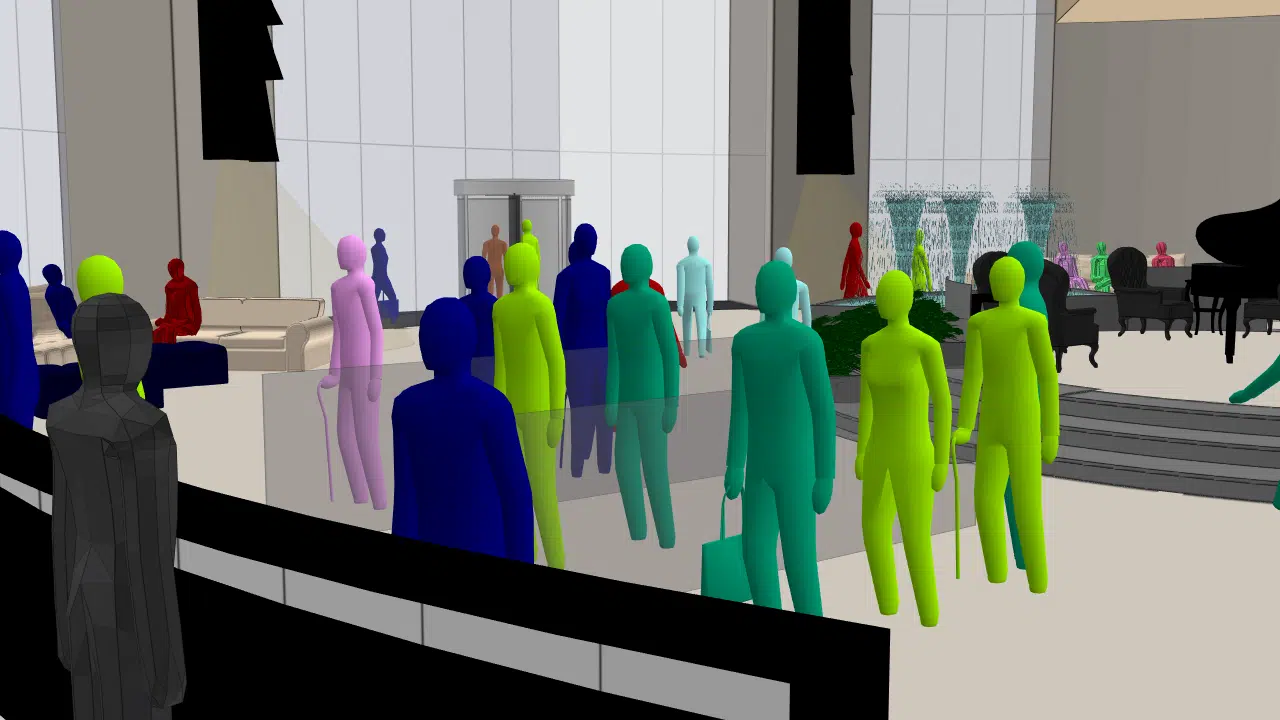
This bottom-up perspective has particular relevance to people movement. A crowd may be visible collectively, but it's made up of individuals responding to each other and to the environment around them.
Embedded research in simulations
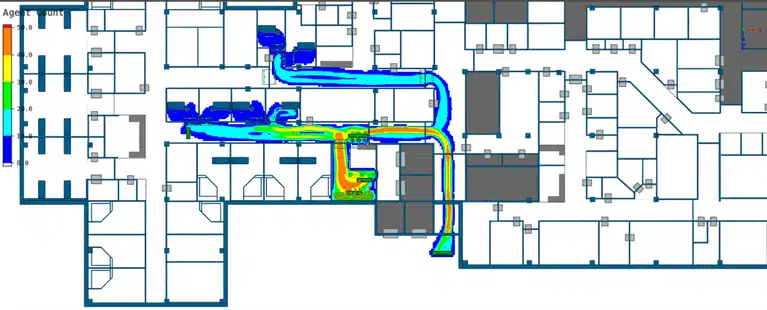
Pedestrian simulation brings these strands of research together, using computational models to explore how individuals interact with each other and the spaces around them. Instead of looking only at capacity, designers can investigate the patterns that emerge as people navigate stations, airports, venues, themed parklands, retail spaces and other public environments.
These foundations are reflected in MassMotion. Its agent-based approach models individuals moving through a virtual environment, while the influence of Fruin's pedestrian research remains visible too. MassMotion includes an analysis option that allows agents to move as “Fruin people”, connecting decades of research into pedestrian density and movement with contemporary simulation.
Together, these developments have helped shift the question from simply “How many people can this space accommodate?” towards something more human “How might people actually move through and experience it?”
From better models to better questions
The evolution of pedestrian modelling shows how research, computation and engineering practice can build on one another. From Fruin's work to quantify pedestrian movement to the development of ABM and increasingly sophisticated simulation, each advance has given us a different way to examine the relationship between people and place. MassMotion sits within that continuing evolution, bringing these strands of thinking into a modern pedestrian simulation environment.
That history is also a reminder that progress isn't simply about creating more sophisticated technology. It's about the questions that technology allows us to ask.