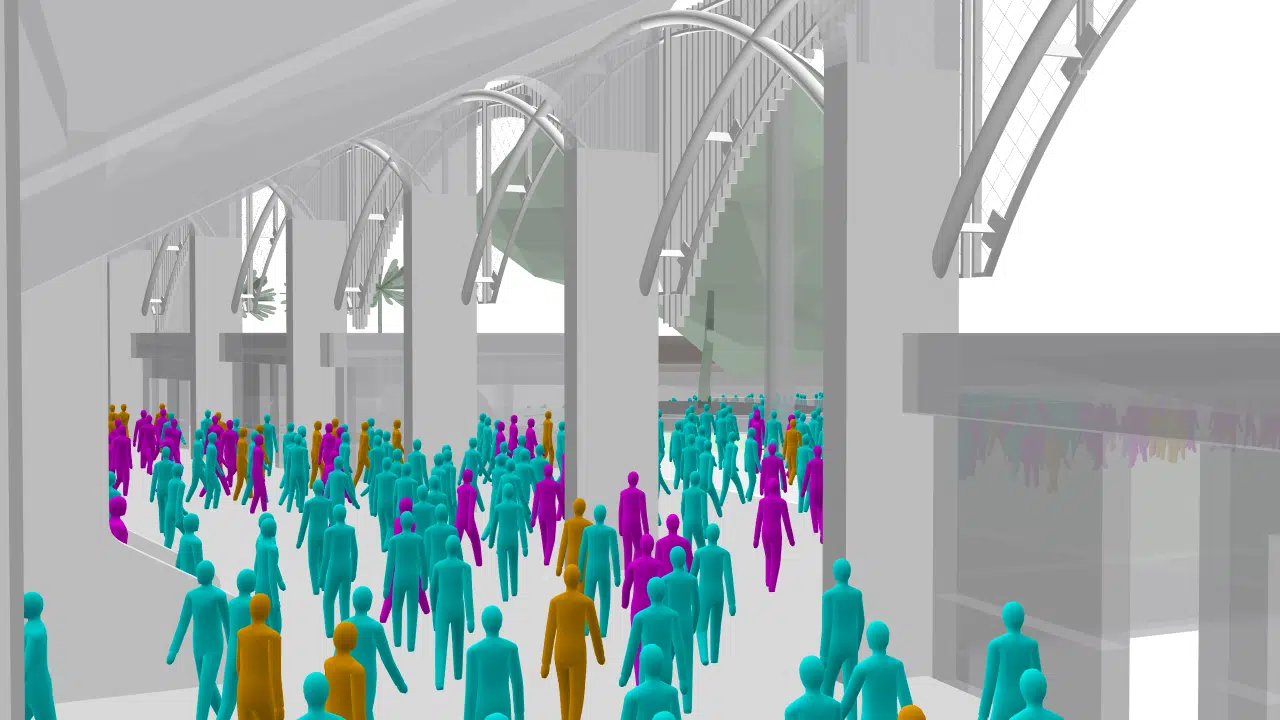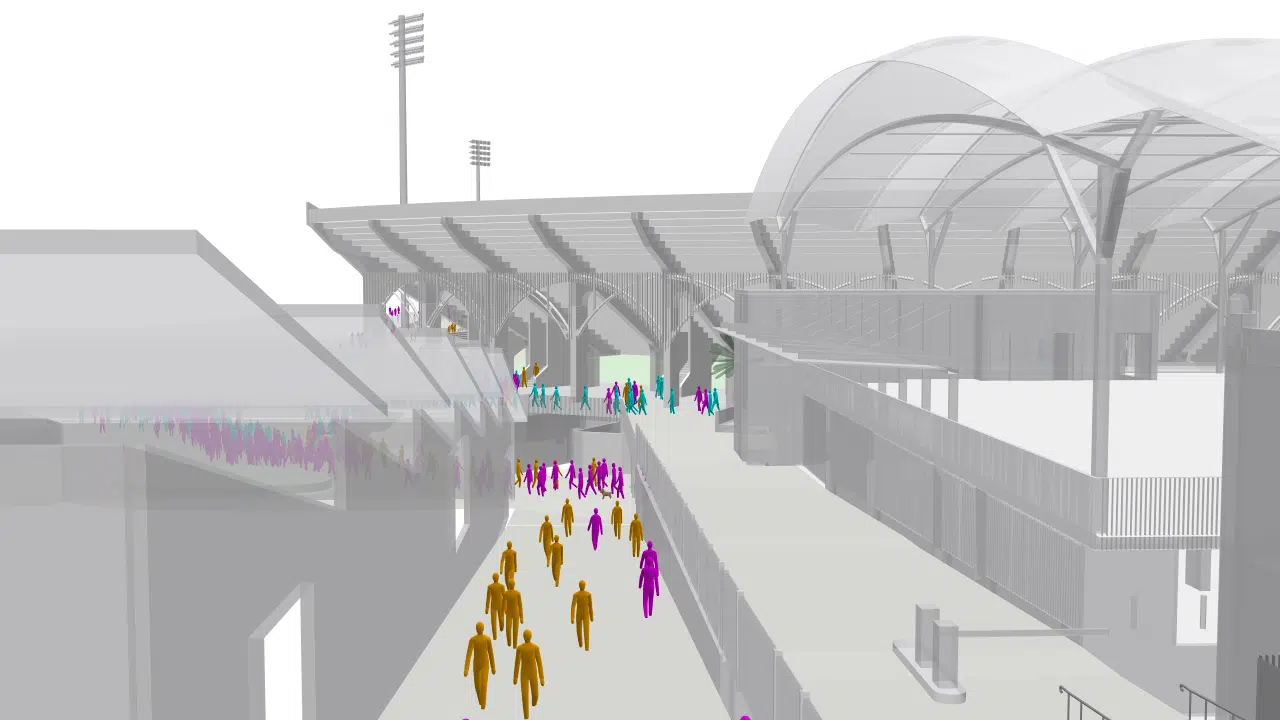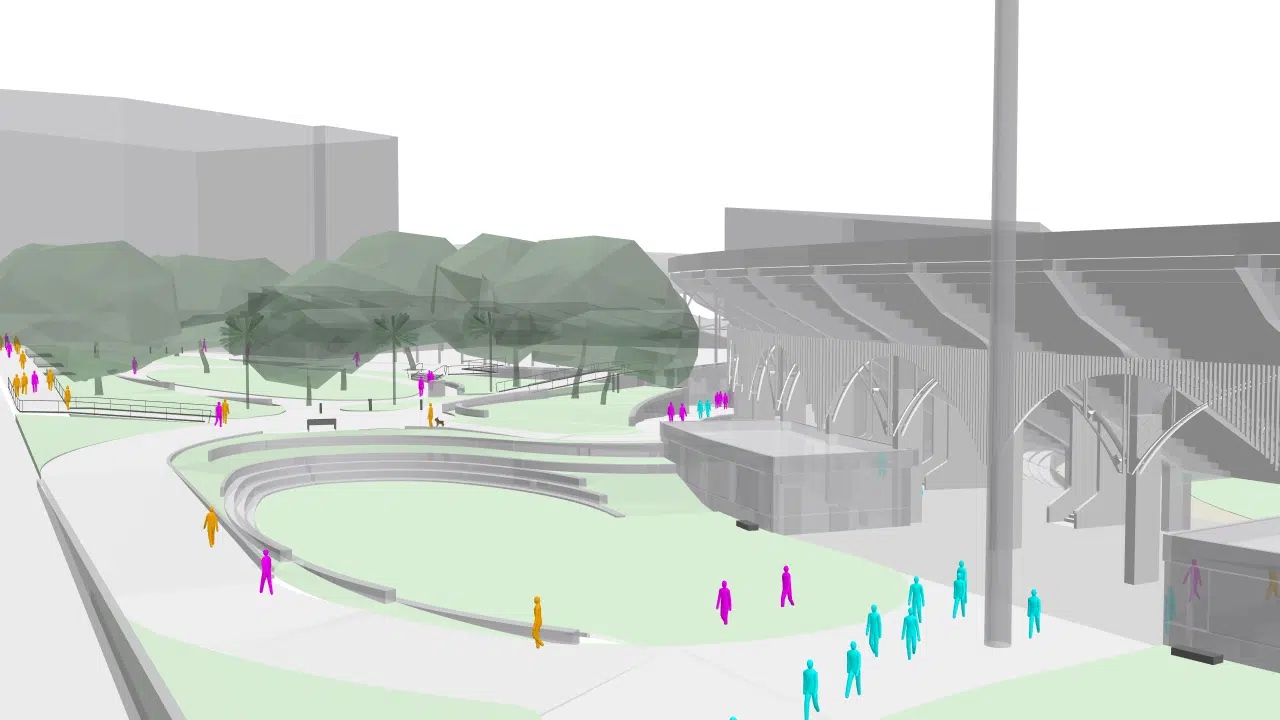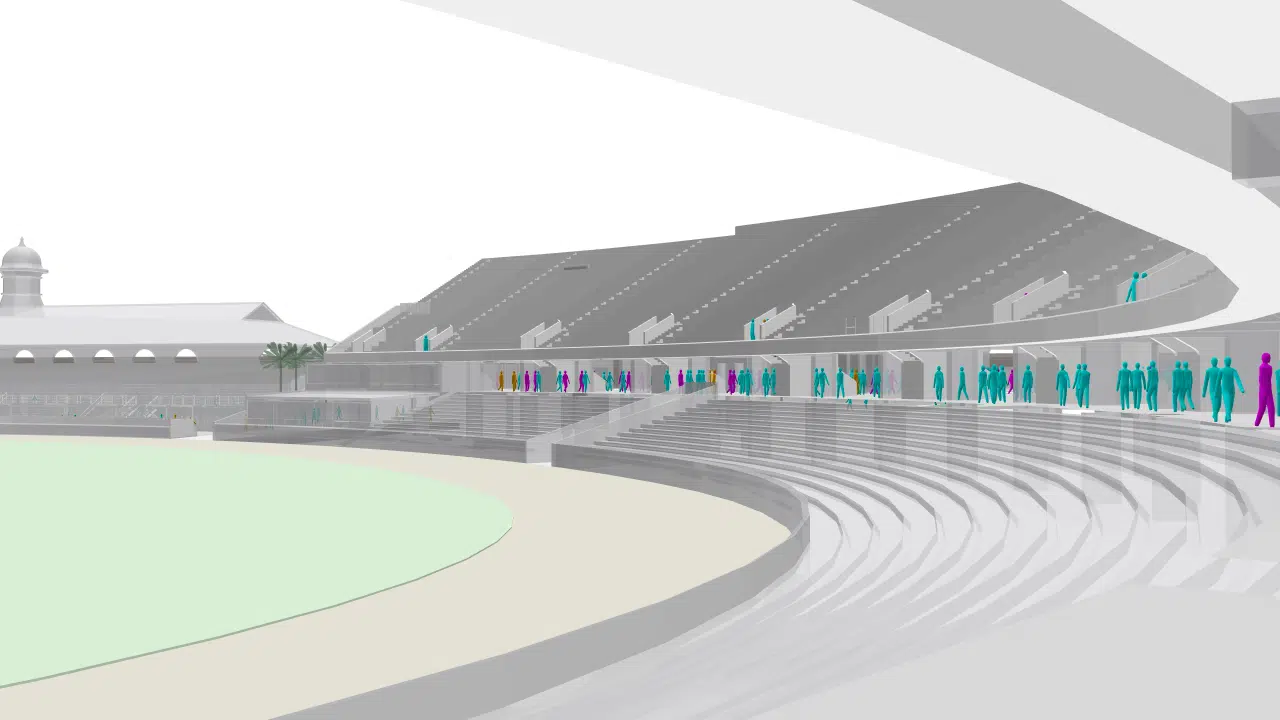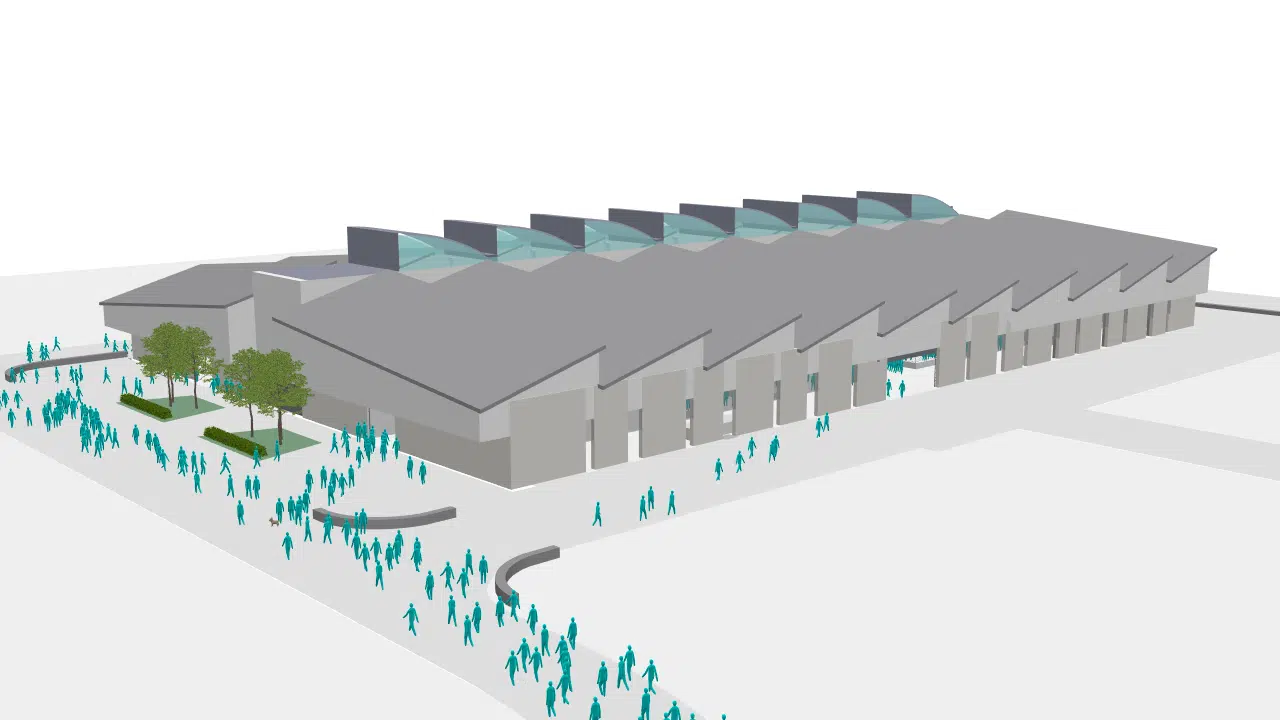
Brisbane Showgrounds has hosted the Ekka since 1876, and in 2032 it will play a role in the Brisbane Olympic and Paralympic Games as part of the Athletes Village. A $287.5 million redevelopment, delivered by the Royal National Agricultural and Industrial Association of Queensland (RNA) in partnership with Lendlease, is upgrading the Main Arena and delivering a new Machinery Hill grandstand and a new multi-storey Horse Pavilion. During the 2032 Games, the precinct will house more than 10,000 athletes and officials for the Olympics and 5,000 for the Paralympics, with the 1,800 apartments converted to permanent housing afterwards.
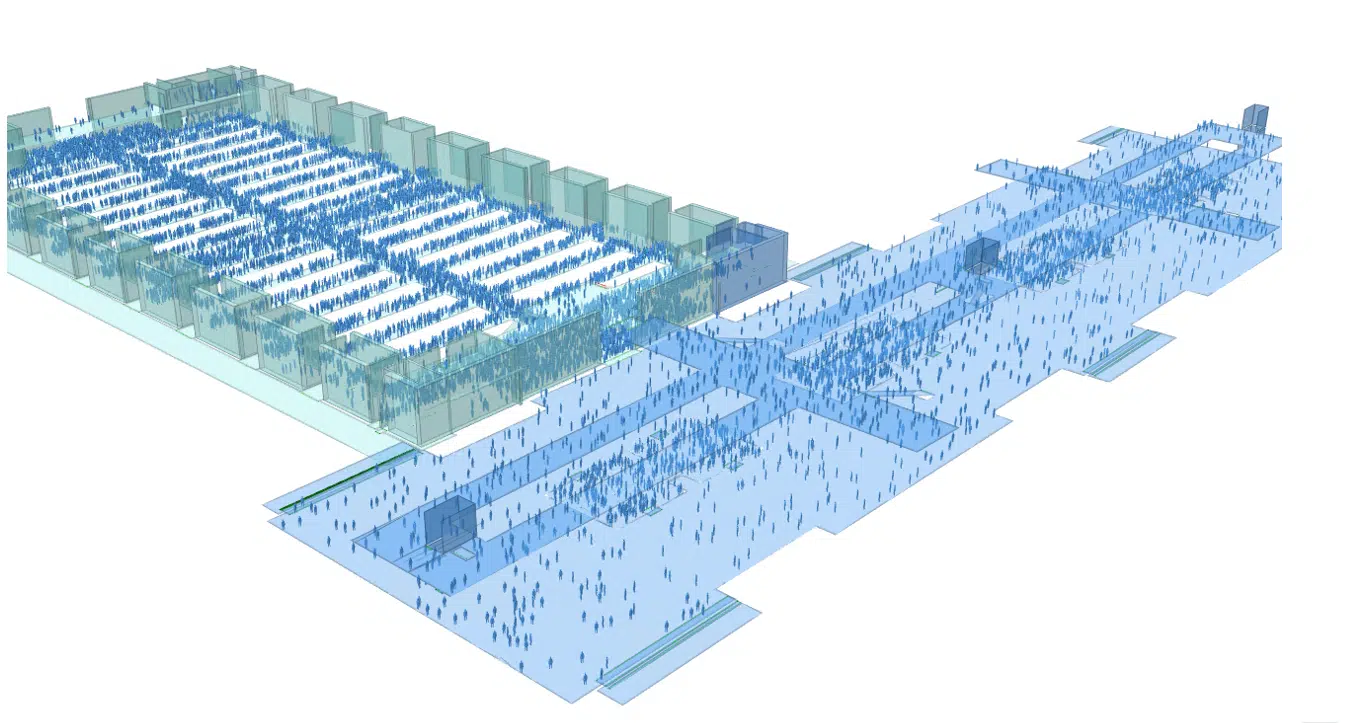
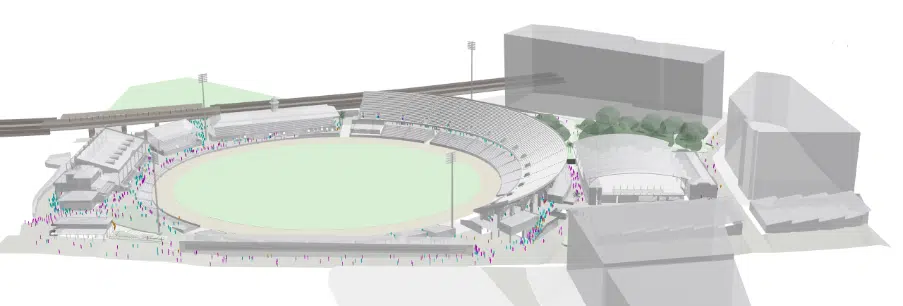
DC Partnership was asked to assess crowd movement across the precinct, covering the Main Arena and surrounding Showgrounds, using pedestrian simulation software, Oasys MassMotion, to test different scenarios in support of the Detailed Design stage of the redevelopment.
Modelling different operating modes
The MassMotion modelling required an understanding of Brisbane Showgrounds' performance under different event mode scenarios, and how the redeveloped precinct would support populations beyond what the existing Showgrounds was designed for. The iconic Ekka will bring up to 21,000 patrons through the heritage stands, Main Arena and surrounding paddocks for events like the Night Show fireworks and Grand Parade. The Showgrounds also hosts large-scale live music festivals, with multi-stage events that have the potential to go beyond 30,000 site-wide once increased-capacity scenarios are factored into the new design, testing whether the upgraded venue could accommodate crowds of different sizes for the different modes.
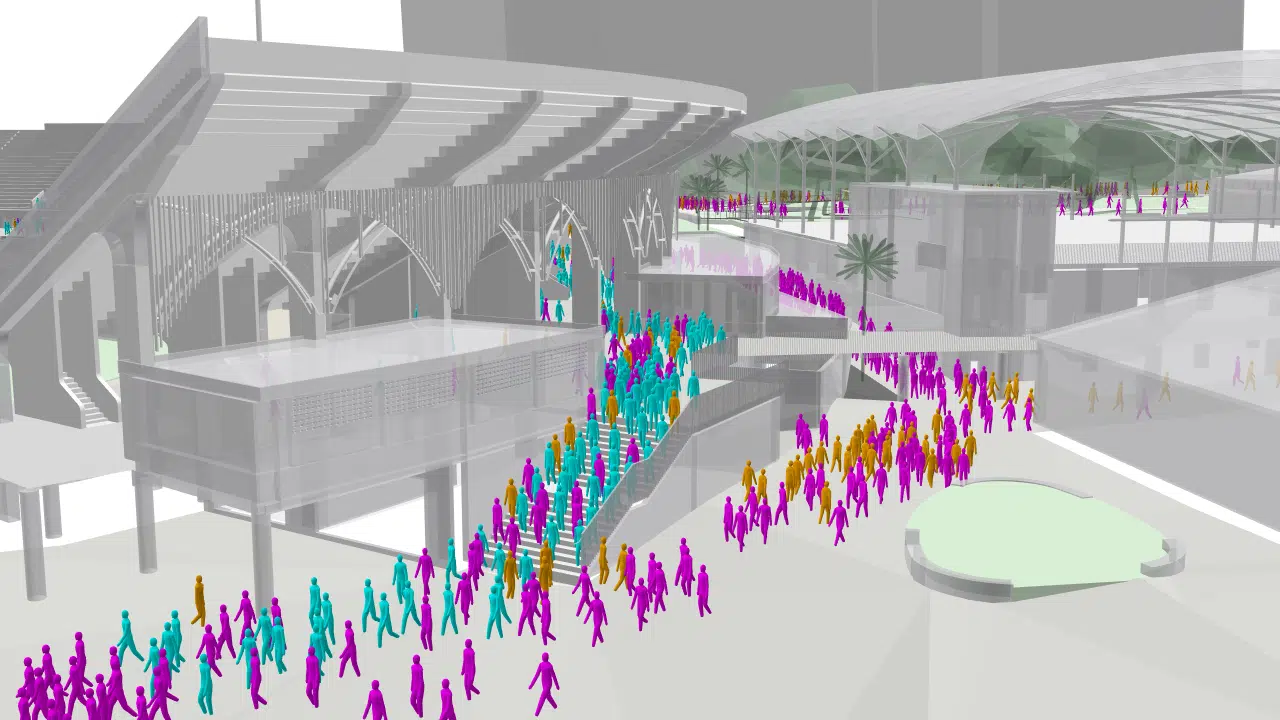
During the 2032 Olympic and Paralympic Games, circulation between the Main Arena and the Royal International Convention Centre (RICC), to be used as a food hall, was modelled separately for the Olympic and Paralympic populations based at the Athletes Village, including people requiring universal access, over defined multi-hour windows. It's a smaller, more predictable crowd than a public event, but with very different mobility needs, and MassMotion let DC Partnership build that difference into agent movements rather than applying a blanket assumption across every mode.
Modelling these scenarios showed DC Partnership where the precinct's circulation was constrained, identifying pinch points that warranted further investigation, and where operational crowd management measures, rather than design changes, could address a given phase of an event. That included measures to support emergency evacuation from the Main Arena during large-scale live music festivals.