Beyond where congestion occurs: understanding when crowded conditions develop, how long they persist, and how this can support better-informed decisions on patient flow, hospital spatial planning and infection prevention.
Ongoing doctoral research in the Department of Civil and Environmental Engineering at Brunel University London by Rifqa Al-Hashlamon, under the supervision of Dr Kangkang Tang.
Hospital waiting environments can experience fluctuating patient demand, prolonged waiting and periods of congestion, particularly under changing operational conditions. Understanding how patient movement, waiting and accumulation influence where congestion develops and how these conditions change and persist over time is important for healthcare planning, as prolonged co-presence in shared waiting spaces can create conditions relevant to infection exposure. Oasys MassMotion is being used to investigate patient flow and the spatial–temporal development of congestion within hospital waiting environments, with the wider aim of supporting more resilient and infection-prevention-informed healthcare planning.
Simulating patient flow and waiting in hospital environments:
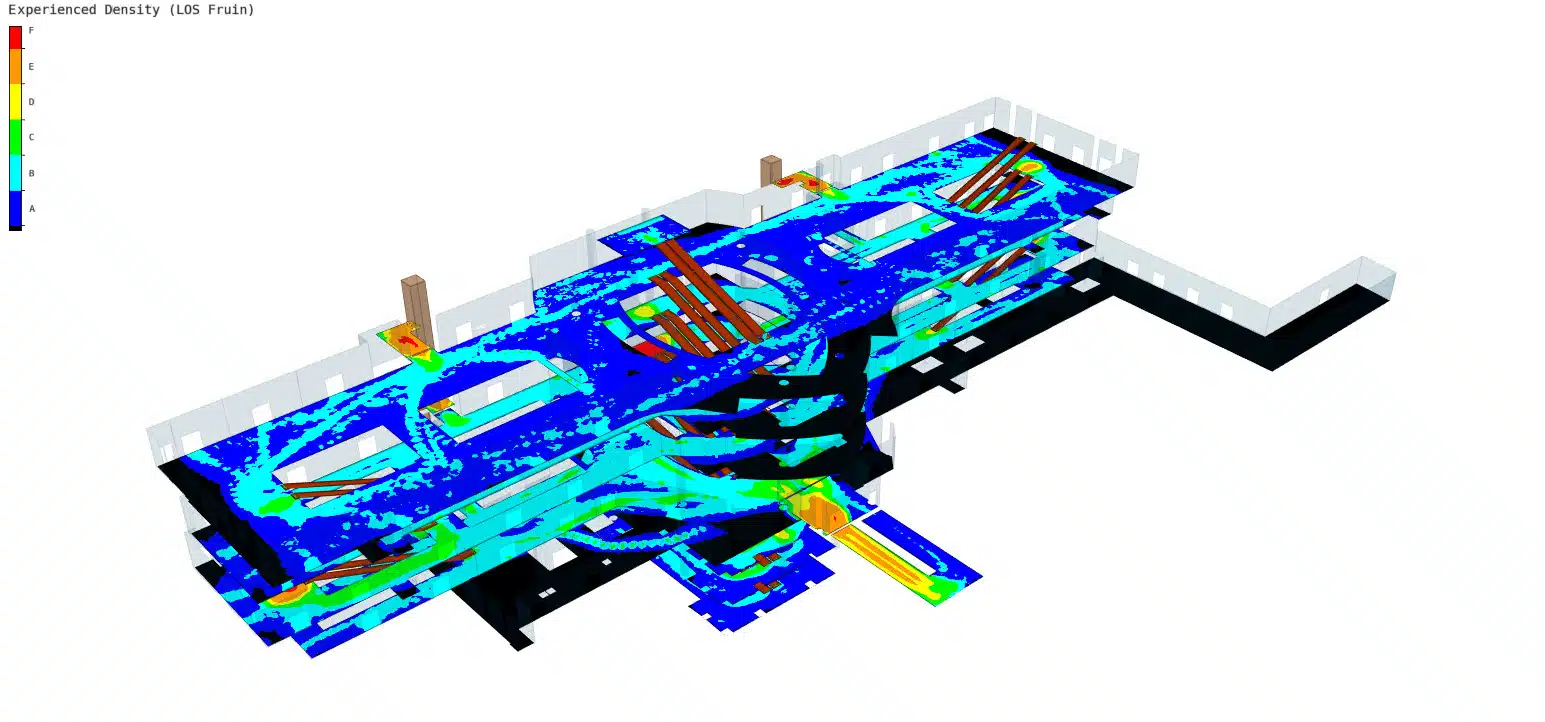
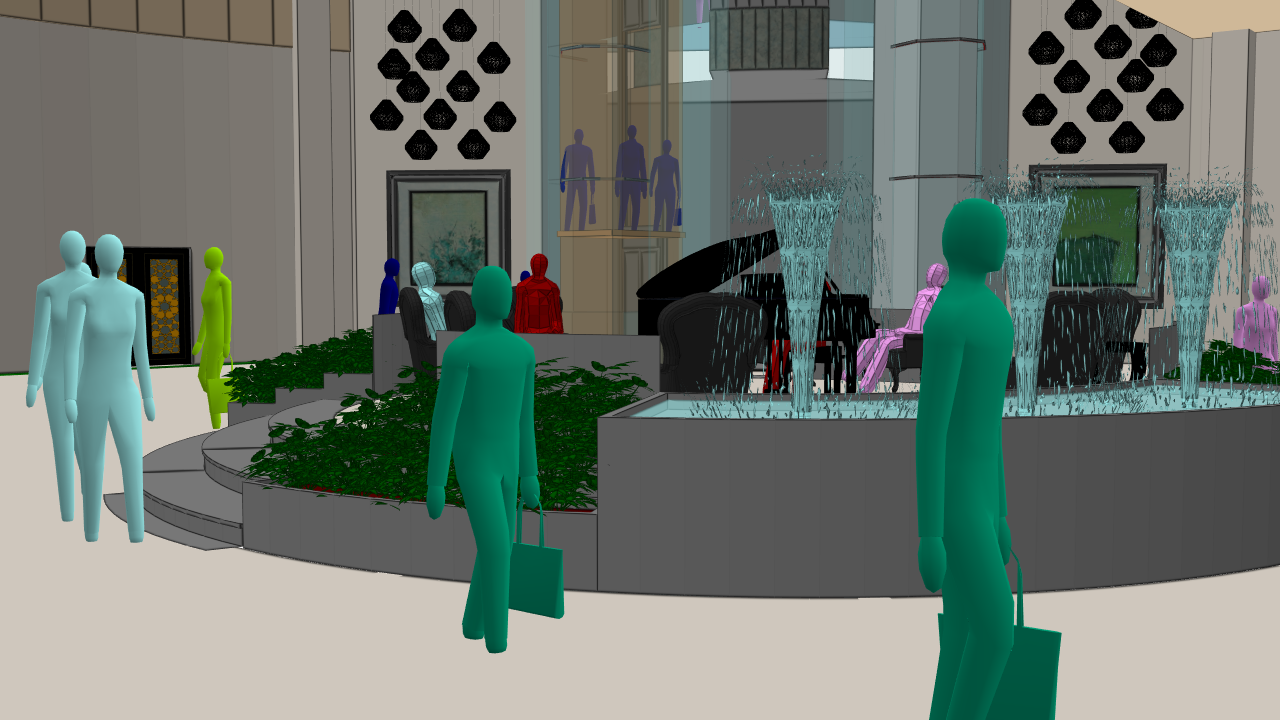
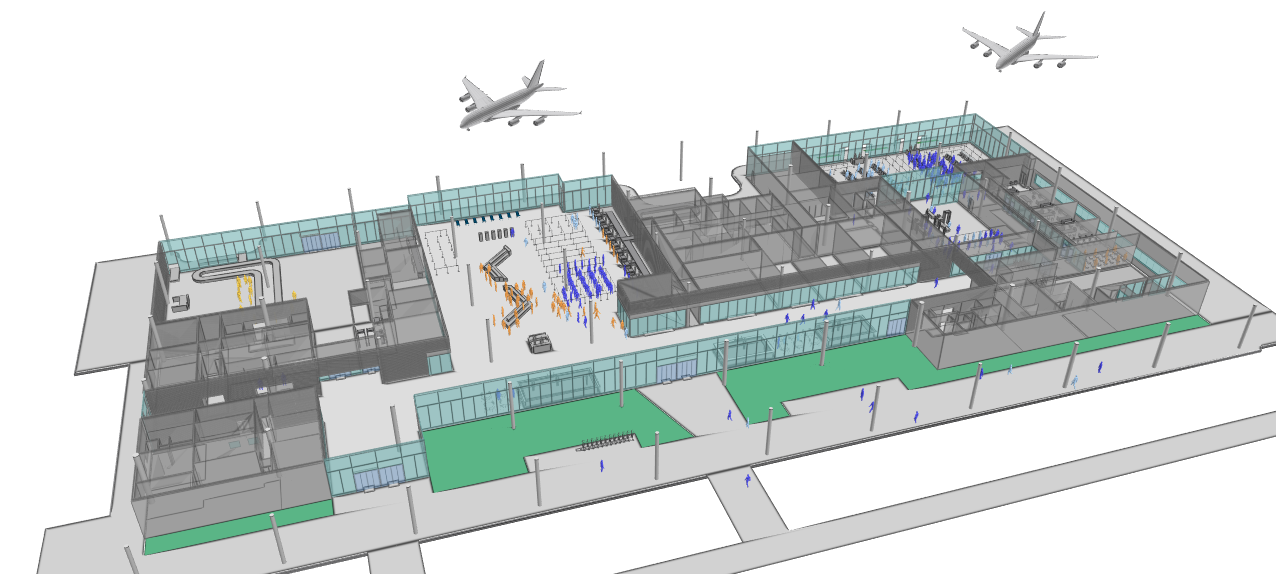
MassMotion is used to develop an agent-based representation of patient journeys through hospital waiting environments, allowing movement, waiting and the use of different spaces to be examined together. The model is informed by anonymised NHS operational data on patient arrivals and waiting times, accessed under institutional approval, and can represent how changing patient demand and service capacity affect queues, patient accumulation and occupancy within waiting areas. By linking patient movement and waiting with the spatial configuration of the hospital environment, the simulation enables analysis of how congestion emerges, builds up and is sustained across hospital waiting spaces over time.
Understanding congestion across space and time:
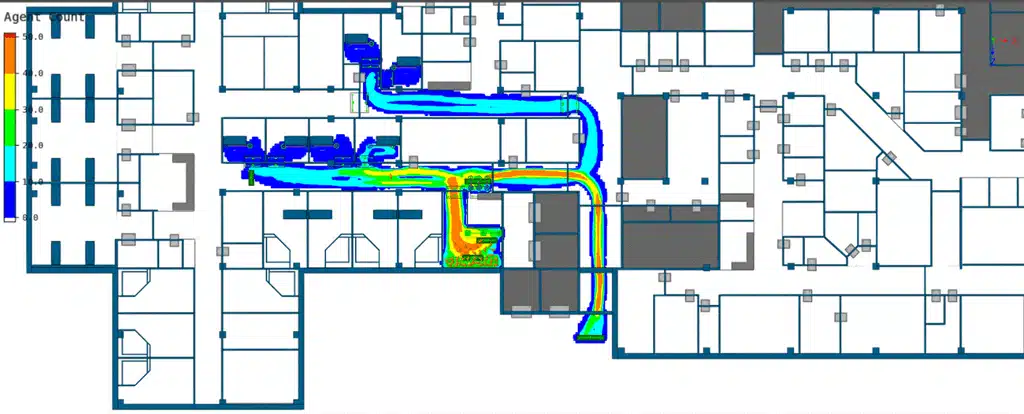
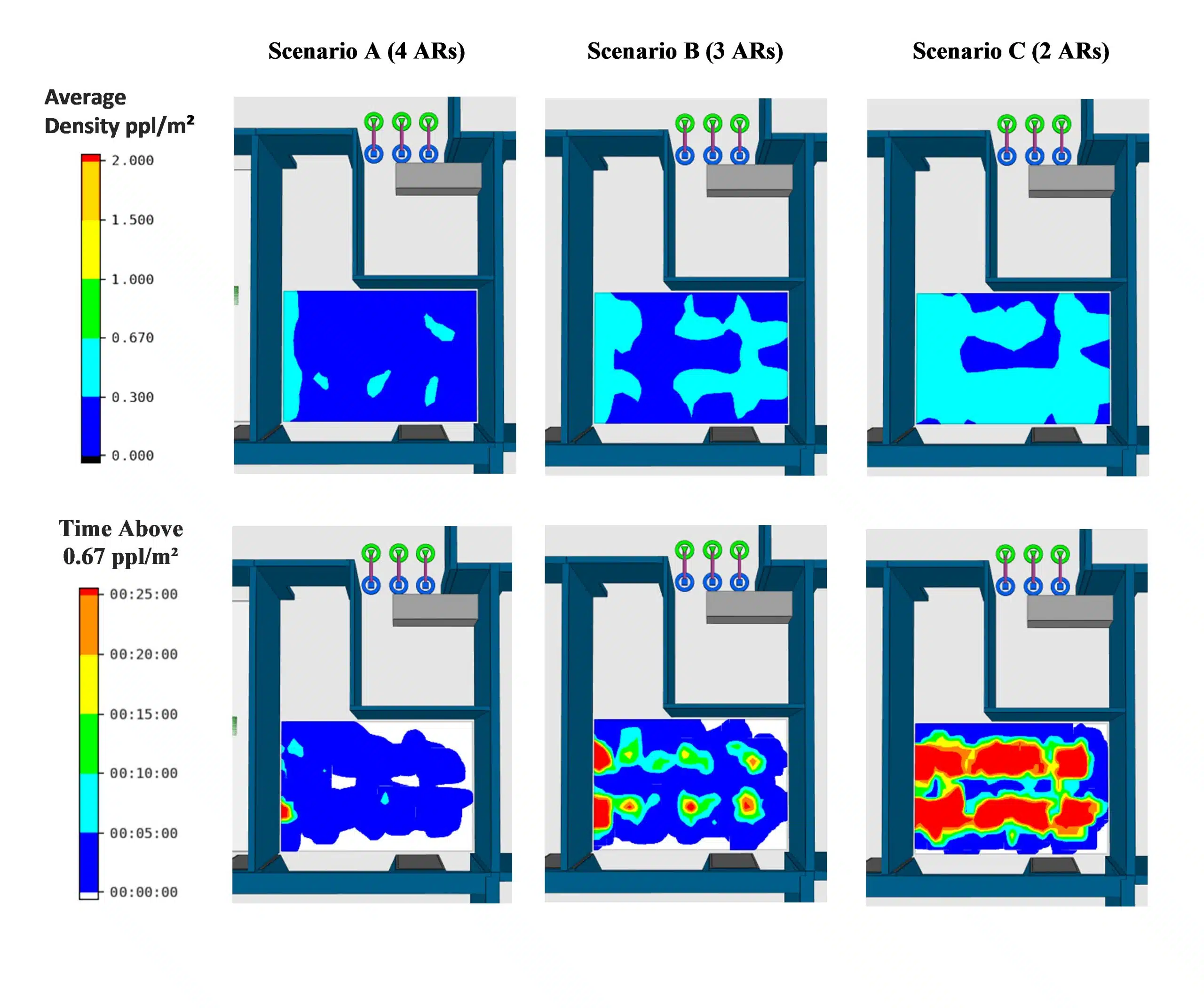
The research examines congestion not only in terms of how crowded a waiting area becomes, but also how long elevated-density conditions persist and how these patterns change over time. Using MassMotion outputs, spatial and temporal changes in waiting-area conditions can be explored under different patient-demand and service-capacity scenarios. This helps identify where and when congestion becomes more pronounced and can support consideration of operational or spatial interventions, such as changes to service provision or the configuration and use of waiting spaces.
Exploring operational and spatial scenarios:
The research is exploring how variations in patient demand, service capacity and spatial provision alter the performance of hospital waiting environments. MassMotion allows these scenarios to be assessed using flexible spatial and temporal criteria that can reflect different planning or exposure-related assumptions. This provides a flexible basis for comparing alternative layouts and operational strategies, testing how waiting spaces respond under different levels of pressure, and identifying interventions that may reduce sustained congestion. As the research develops, the approach can be extended across a wider range of hospital settings and scenario combinations to support resilient and infection-prevention-informed design and operational decision-making.
Acknowledgement: The ongoing doctoral research has benefited from the clinical and infection-prevention insight and support of Dr Stella Barnass, Consultant Microbiologist.
For more information about this research study, contact Rifqa at [email protected].