With our deepest condolences we reflect on the passing of John J. Fruin earlier this year at the Massapequa Rehabilitation Facility, close to his home in Amityville, New York at 96 years old. Leaving behind a legacy within the pedestrian dynamics industry, join us in remembering and honouring Fruin for his pioneering work that paved the way for the next generation of pedestrian planners to design safer and more mobile cities.
Fruin's groundbreaking work in the 1970s laid the foundation for modern pedestrian planning and design. Without this, advanced pedestrian simulation software like Oasys MassMotion would simply not exist. The research behind pedestrian simulation design is relatively recent. Before Fruin, there was little to no scientific basis for the concept outside of the emergency evacuation space. Born out of numerous fire disasters, emergency egress was the first type of people movement analysis considered essential for a safer society. However, Fruin looked beyond emergencies and was the first to establish a mathematical equilibrium between crowd movement speed and crowd capacity measures for safety.
Crowd engineering quantified:
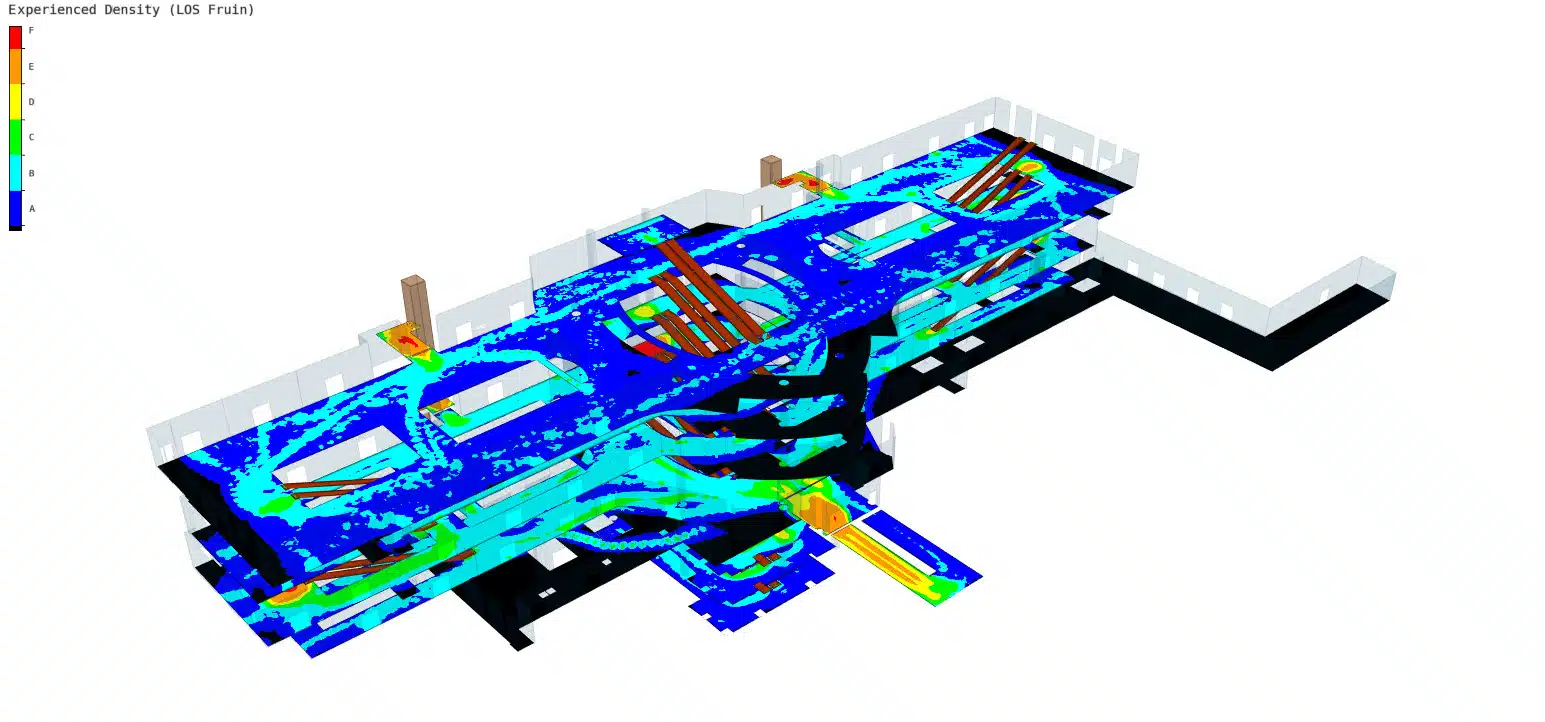
Fruin's book, Pedestrian Planning and Design (1971), is a seminal work that has been widely cited in guidelines for pedestrian planning. It introduced the concept of Level of Service (LoS) for pedestrian facilities, which assesses the comfort and safety of pedestrian environments based on density and speed relationships. His work popularised the use of pedestrian simulation design on infrastructure projects, reinforcing the requirement to make our cities safer.
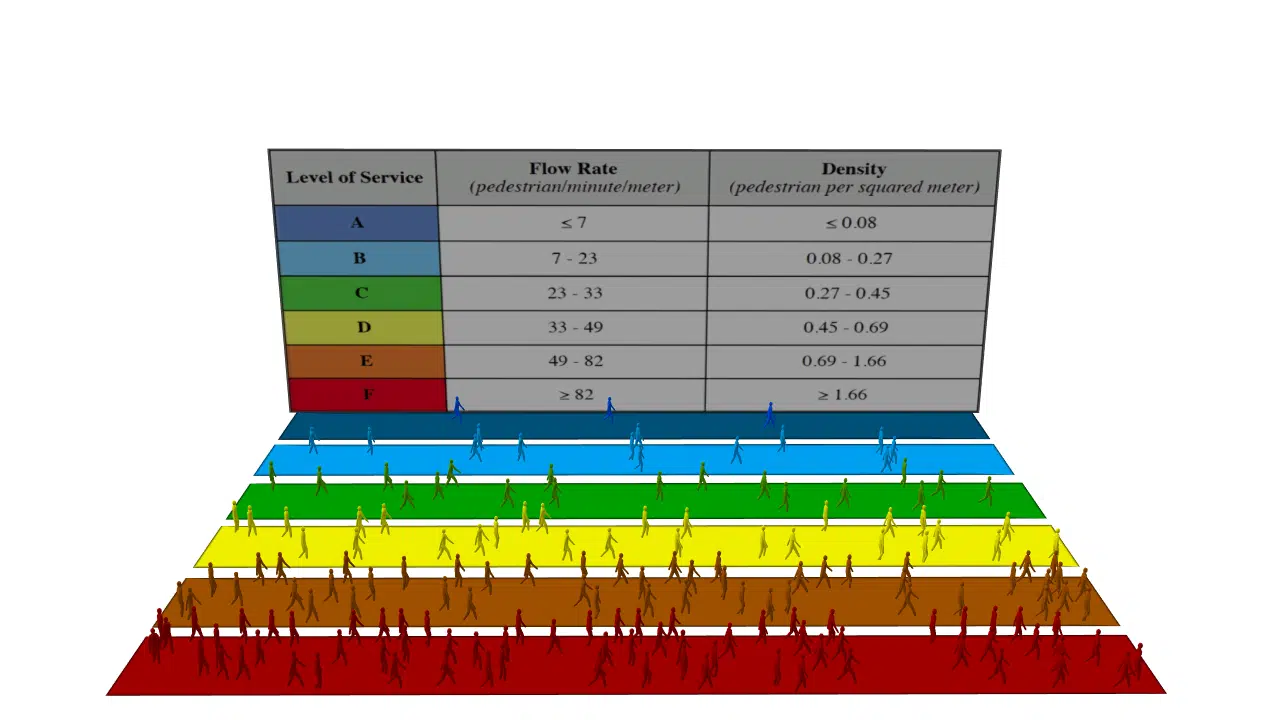
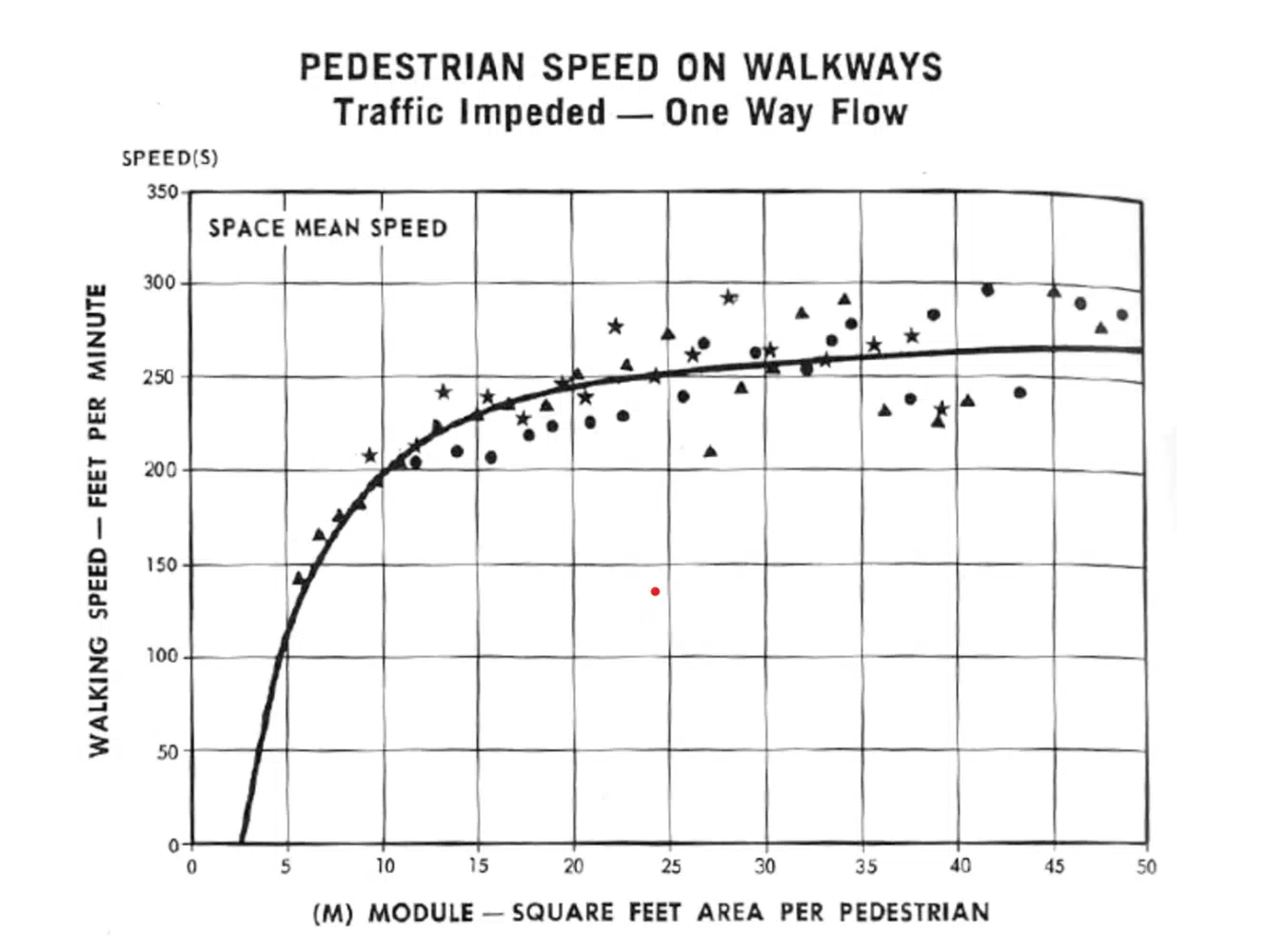
Fruin's research included detailed measurements of human body dimensions, such as shoulder breadth and body depth, which are crucial for designing pedestrian facilities like doorways and stairways. His work also explored the dynamic effects of geometry on crowd behaviour, which has been developed further to discover how pedestrian behaviour in different environments (e.g., city streets vs. stadiums) can vary significantly. His research on crowd dynamics and his guidelines for preventing crowd disasters have become essential in designing safe public spaces. His work emphasises the importance of real-time information and communication in managing large crowds, which is crucial for venues like stadiums, transportation hubs, and large public events.
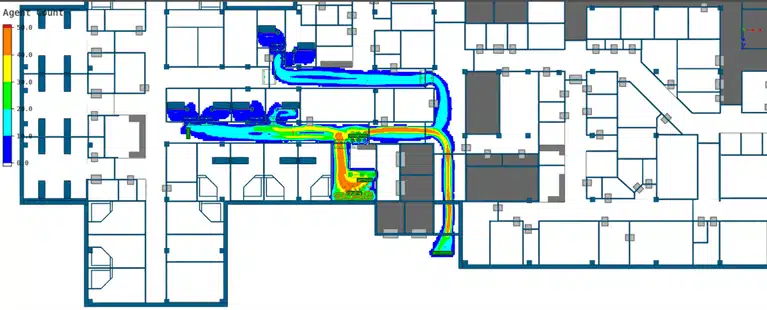
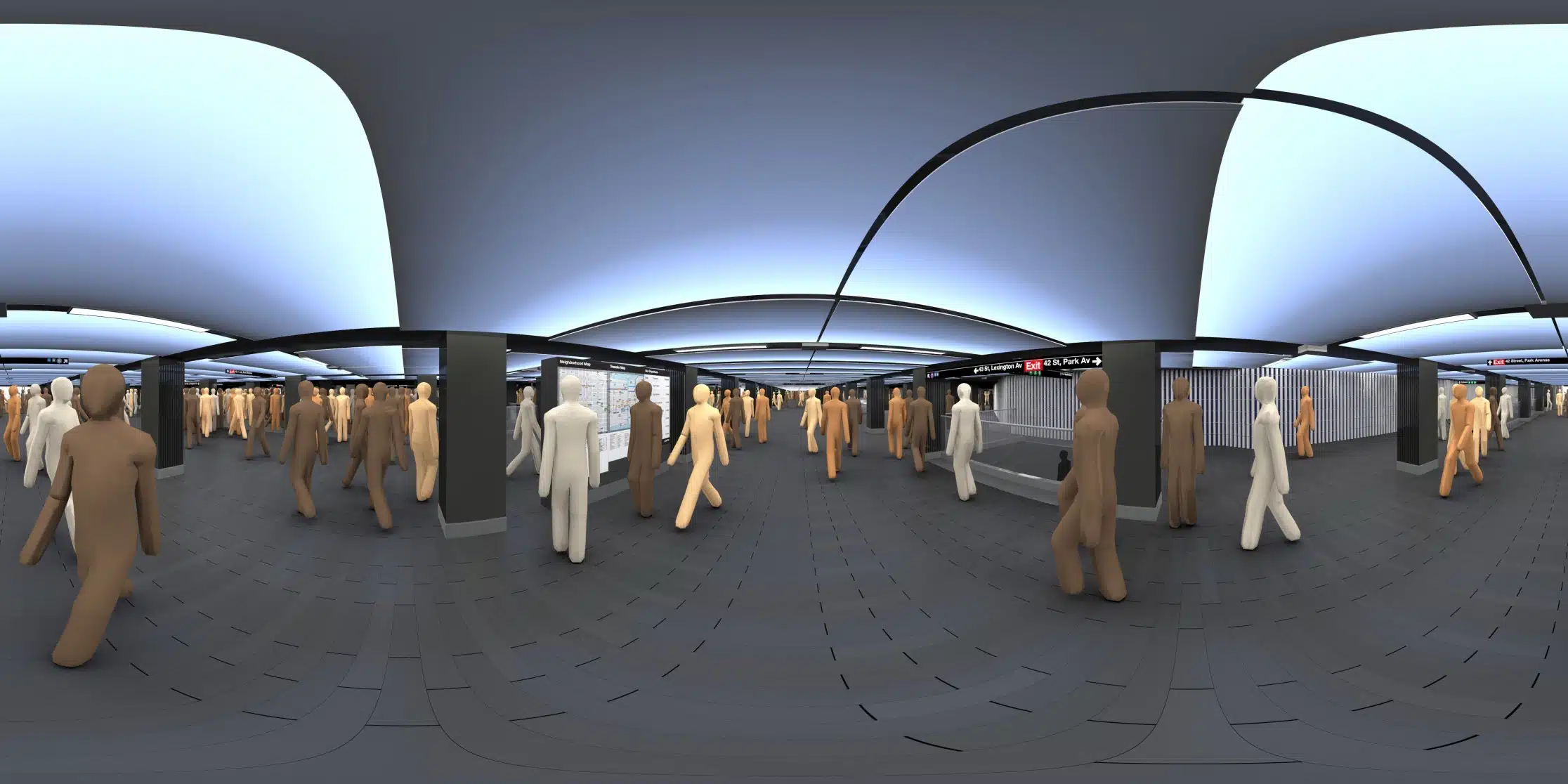
Based on the 1960s and 70s New York City subway, his processes became industry standard and put pedestrian simulation design at the forefront of infrastructure design. Read this case study to see how the Arup People Movement team utilised 3D immersive technology, a Virtual Reality (VR) environment and Oasys MassMotion to create a ground-breaking, user-centric perspective for design review for the Grand Central-42nd Street subway station in New York City. This project exemplifies how Fruin’s work has been revolutionized to align with the modern world.
The future of pedestrian simulation:
Fruin's contributions have had a lasting impact on urban planning, transportation engineering, and the design of public spaces. His work continues to be a reference point for professionals in these fields as well as academia. His principles are integrated into various national and international standards, influencing the design and operation of public spaces worldwide.
However, the world has evolved significantly since Fruin’s initial work, necessitating further research to adapt to our ever-changing environment. While our tools and design methods are built on his foundational work, it is essential to continue developing them to accommodate different cultures, cities, populations, and behaviours to stay current.
Evolving tools:
Built on Fruin’s work, Oasys MassMotion is the world’s leading pedestrian simulation software. To this day, MassMotion has an analysis system option for agents to move like ‘Fruin people’. We continue to develop the tool out of our commitment to leverage what Fruin started and revolutionise it for the modern world.
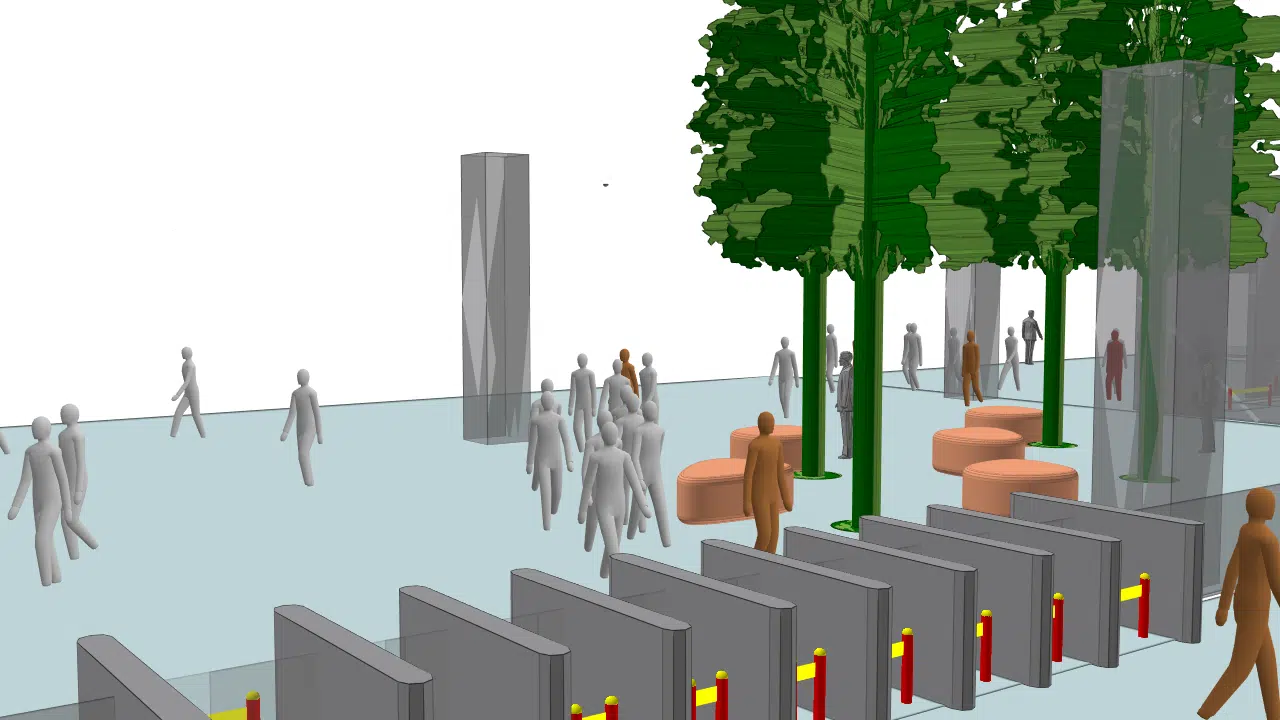
With 68% of people projected to live in urban areas by 2050 (United Nations), our cities are becoming increasingly complex, making it harder than ever to predict people's movements. Therefore, it's crucial to have the tools to test various scenarios in different environments to create safer cities that cater to everyone in our society. We must consider behaviours based on multiple factors and use real-world data to empower inclusive designs. Additional context is essential for how we navigate our cities now and in the future. Watch our webinar to learn how we’re working closely with academic bodies to elevate pedestrian simulation analysis for the future of public space design.
MassMotion is backed by extensive research, ensuring that you can focus on keeping the people of today at the heart of the design process. Developed to address a clear need within the industry, MassMotion’s capabilities are continuously updated to ensure you can test scenarios and environments as they emerge. Thanks to Fruin’s work, we now have the tools to confidently analyse pedestrian movement, ensuring that we are not only safe but also comfortable in the world we live in, now and for many years to come.
We bid a fond farewell to a visionary within the industry and will strive to ensure his legacy remains ingrained in pedestrian simulation and crowd dynamics forever.