Mobile phone use and cognitive distractions notably affect pedestrian walking patterns by reducing speed, shortening steps, and increasing lateral deviations. Talking on the phone slows gait and leads to more conservative movement strategies, decreasing overall pedestrian flowrates and increasing congestion (Licence et al., 2015). While navigating a facility, obstacles within the built environment can lead to adaptive gait patterns such that older individuals are usually at a greater risk of tripping, colliding with others or deviating from the original path.
Younger pedestrians, particularly college students, are also at an elevated risk, mainly when crossing intersections while talking or texting (Stavrinos et al., 2011). The cognitive function of a pedestrian relates to the inability to manage more than one task at a time. This relates to the dual-task interference theory, where competing attentional demands limit the pedestrian’s ability to manage both locomotion and secondary tasks simultaneously (Stavrinos et al., 2011; Lamberg & Muratori, 2012).
Case study example: Distracted pedestrians within a university campus
On college campuses, around one-third of pedestrians are distracted while crossing, with headphones (19%), texting (8%), and talking (5%) being the most common behaviours. Across diverse urban environments, including campuses, downtown areas, school zones and entertainment districts, distracted crossings behaviours exhibited by individuals seem to vary. Campus areas note the highest distraction rate (~53%), while entertainment zones are lower (~16%) which highlights the variability of agent movement and decision-making choices based on the area and target destination they’re headed towards.
A detailed case study at the intersection of McGill and Summit streets near Thompson Rivers University (TRU) provides an explicit investigation of these effects in a real-world scenario (Alsaleh et al., 2018). The site is a two-way commercial corridor with high pedestrian traffic and was evaluated under daylight and mild weather conditions in April 2016.
Using video data and the Kanade-Lucas-Tomasi (KLT) tracking algorithm, researchers extracted 357 pedestrian trajectories, out of which included 136 distracted individuals (talking or texting) and 221 undistracted individuals. Trajectories were mapped frame by frame, achieving detailed gait metrics including step length, step frequency and walking speed.
Results have shown that distracted pedestrians walked significantly slower (1.49±0.24m/s) as compared to undistracted pedestrians (1.66±0.19m/s). Based on the gathered lower Walk Ratio (WR) and Acceleration Auto-Correlation (ACC) values, distracted walkers had shorter step lengths and reduced gait stability. These metrics revealed more irregularity and variability in gait which is indicative of frequent micro-pauses, stop & start corrections, and hesitations.
It is, also, important to address the influence of distraction type on the movement adaptation strategies:
- Pedestrians who were talking on the phone or listening to music slowed down by reducing their step frequency and producing a more continuous but sluggish gait.
- Pedestrians messaging on their phones were moving slower by reducing their step length. This behaviour increased the likelihood of brief pauses when their attention shifted entirely to their mobile.
Overall, distracted pedestrians have a slower gait speed, shorter step length, lower stride frequency, and a higher deviation from gait path compared with non-distracted pedestrians. These findings show that distracted pedestrians are not fully capable of adaptative stop-and-go adjustments which may leave them vulnerable to dynamic traffic environments.
Distracted pedestrian behaviour in high-density facilities
The disruptive effects of distraction are heightened in dynamic, high-density facilities, where localized stop-and-go patterns cause critical flow hindrances.
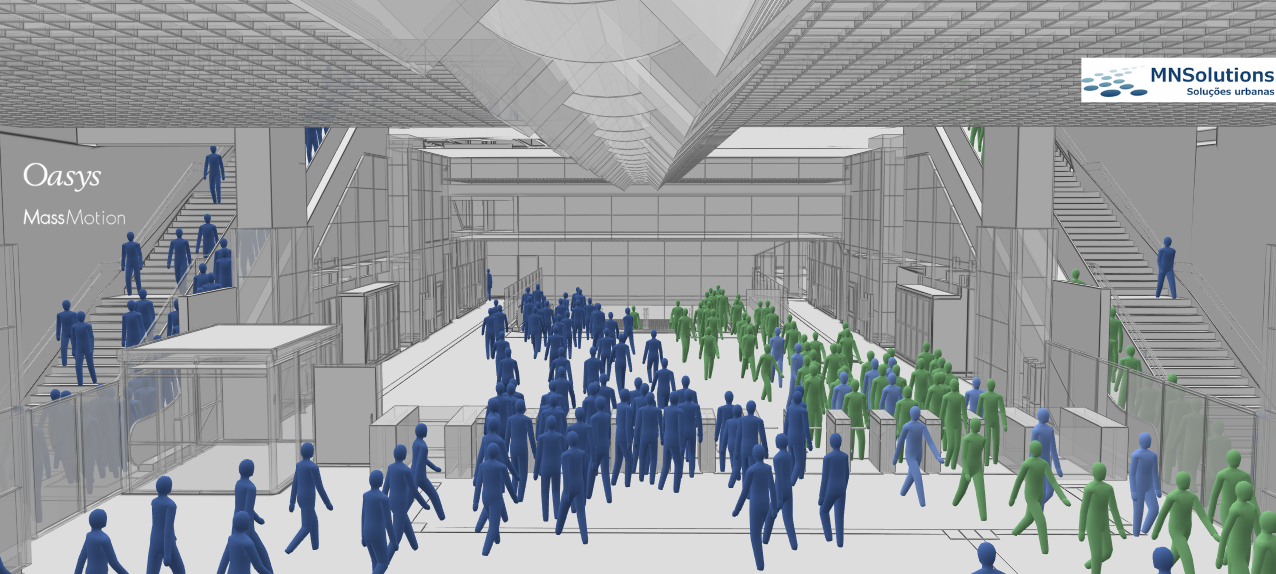
Metro stations
Distracted pedestrians are more likely to miss train announcements and signals leading to delays and potentially dangerous situations. Especially during peak hours, mobile phone use or conversations with others leads to slower walking and increased congestion. Distracted pedestrians can experience a walking speed reduction of 10-30% as compared to an undistracted individual such that overall flowrate decreases by 15-25% (Rijal & Yilmaz, 2024).
- Average walking speed ranges from 0.8 to 1.5m/s depending on the congestion level.
- Densities can range from 0.5 to 3ped/m2 during peak hours such that flow rates vary from 20 to 60 ped/min/m. (Giannoulaki & Christoforou, 2024).
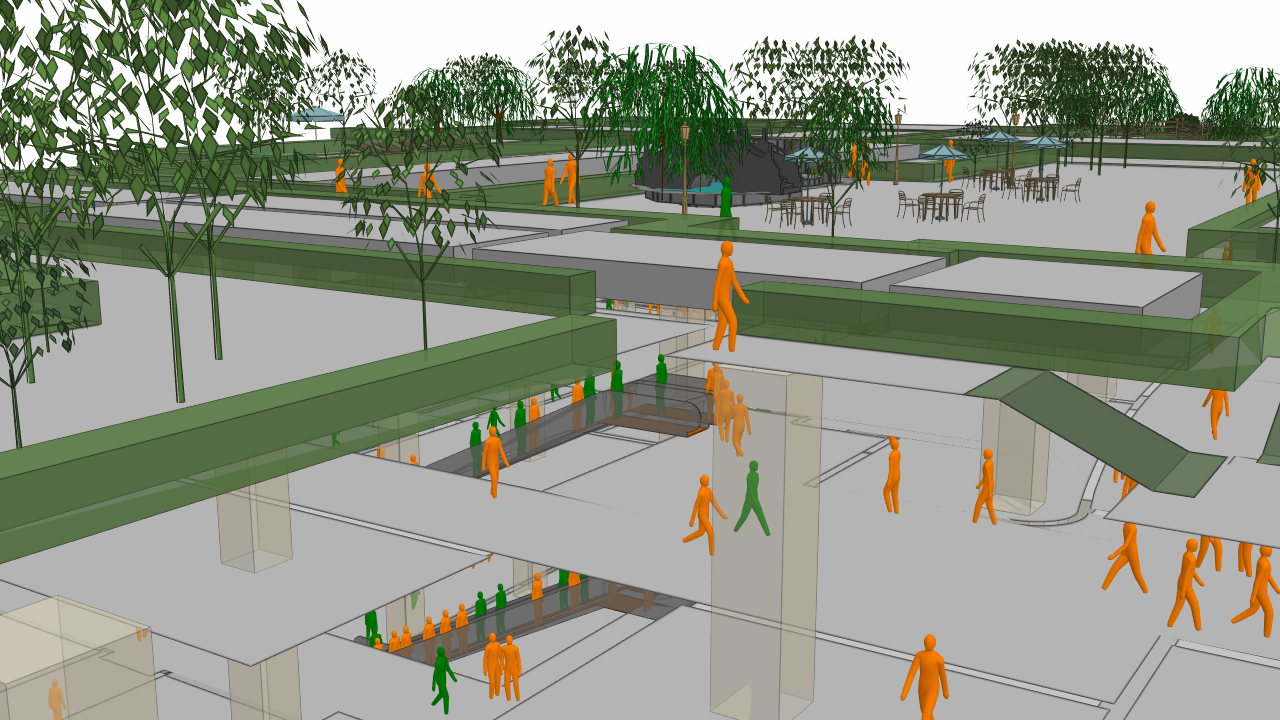
Shopping centres and malls
High levels of pedestrian distractions and erratic trajectories occur due to window shopping, social interactions and mobile phone use. Pedestrians frequently pause suddenly which causes pedestrians following behind them to repeatedly accelerate and decelerate as well. This leads to unpredictable walking patterns, slower speeds, and increased density in certain areas (popular stores, food courts). Those distracted would experience a walking speed that is slower by 20-40% and flowrates in the busy areas drop by 20-35% due to the disruptive walking patterns, a lot of stop-and-go movement.
- Average walking speed is 0.7 to 1.4m/s with the lower range speeds noted at the busier hotspots in the mall.
- Similarly higher densities are pinpointed at the popular locations according to the range of 0.3 to 2.5ped/m2. Depending on the layout and crowding, flowrates range from 15 to 50 ped/min/m. (Buchmuller & Weidmann, 2006).
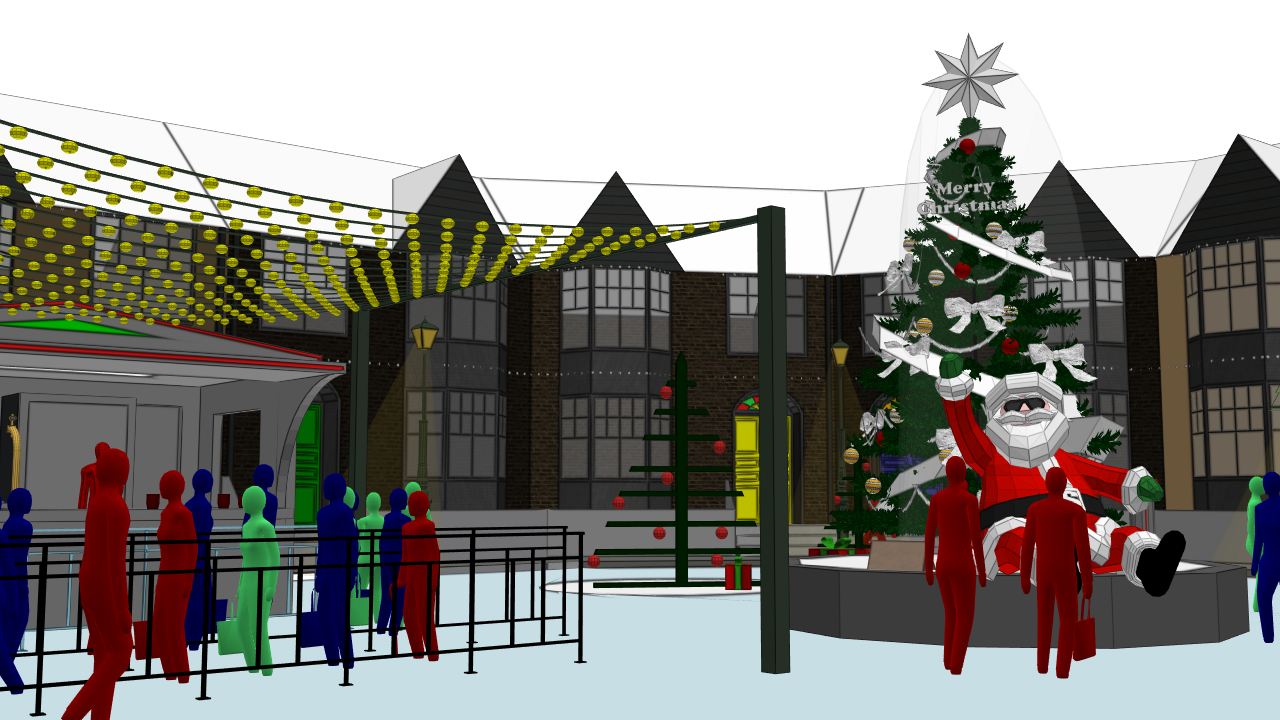
Tourist locations
Due to sightseeing, taking photos, and navigating unfamiliar environments, tourists walk slower and stop frequently too which disrupts those around them, creating bottlenecks. Similar % reduction in walking speed and flowrates can be expected as in a shopping centre. Repeated pauses exemplify distraction-driven stop-and-go oscillations which ripple through dense flows and reduce overall efficiency.
- Average walking speeds range from 0.6 to 1.2m/s due to the frequent stopping.
- Depending on the time of day and season (in the year), densities can vary from 0.2 to 2ped/m2 with flow rates ranging from 10 to 40ped/min/m (as influenced by pedestrian activity and congestion). (Murtagh et al., 2021)
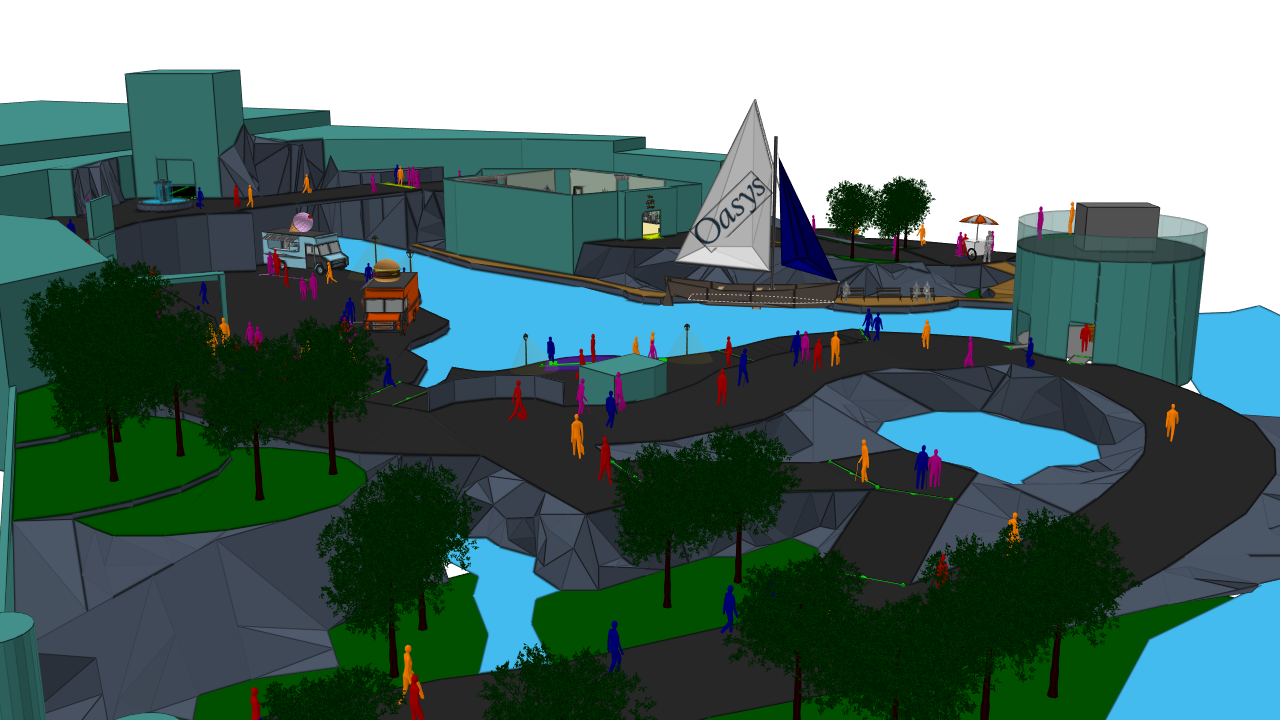
Theme parks
Constant visual and auditory stimuli lead to highly irregular walking behaviour. Visitors often move unpredictably, stopping suddenly to look at attractions, queue for a ride or at food stands and take pictures. This can increase the risk of collision while reducing flowrates.
- Walking speeds range from 0.5 to 1.3m/s due to the visual and auditory distractions.
- Densities then range between 0.4 to 2.5ped/m2 with higher values near major attractions and ride entrances. So, depending on the crowd behaviour, flowrates range within 10 to 45ped/min/m. (Banerjee & Maurya, 2022)
Across all facilities, distractions amplify hesitations and frequent stopping behaviours which lead to an unpredictable moving crowd. These dynamics not only cause congestion, but also magnify risks related to instability and collision, mainly in bottleneck-prone environments.
References
Alsaleh, R., Sayed, T., & Zaki, M. H. (2018). Assessing the effect of pedestrians’ use of cell phones on their walking behavior: A study based on automated video analysis. Transportation Research Record: Journal of the Transportation Research Board, 2672(35), 1–12. https://doi.org/10.1177/0361198118780708
Banerjee, A., & Maurya, A.K. (2022). Pedestrian Flow Characteristics Over Different Facilities: Findings and Way Forward. In Transportation Research in India (pp. 79–99). Springer Transactions in Civil and Environmental Engineering. https://doi.org/10.1007/978-981-16-9636-7_5
Buchmüller, S., & Weidmann, U. (2006). Transport capacity of moving walkways and pedestrian density. ETH Zürich, IVT Working Paper, 489. https://doi.org/10.3929/ethz-b-000047950
Giannoulaki, A., & Christoforou, Z. (2024). Effects of distracted pedestrian behavior on urban rail transit operations. Journal of Transportation Safety & Security, 16(2), 215–233. https://doi.org/10.3390/su16114813
Lamberg, E. M., & Muratori, L. M. (2012). Cell phones change the way we walk. Gait & Posture, 35(4), 688–690. https://doi.org/10.1016/j.gaitpost.2011.12.005
Licence, S., Smith, R., McGuigan, M. P., & Earnest, C. P. (2015). Gait pattern alterations during walking, texting and walking and texting during cognitively distractive tasks while negotiating common pedestrian obstacles. PLOS ONE, 10(7), e0133281. https://doi.org/10.1371/journal.pone.0133281
Murtagh, E. M., Mair, J. L., Aguiar, E., Tudor-Locke, C., & Murphy, M. H. (2021). Outdoor walking speeds of apparently healthy adults: A systematic review and meta-analysis. Sports Medicine, 51(1), 125–141. https://doi.org/10.1007/s40279-020-01351-3
Rijal, B., & Yilmaz, N. (2024). Effects of distracted pedestrian behavior on transportation safety: Causes and contributing factors. Applied Sciences, 14(23), 11068. https://doi.org/10.3390/app142311068
Stavrinos, D., Byington, K. W., & Schwebel, D. C. (2011). Distracted walking: Cell phones increase injury risk for college pedestrians. Journal of Safety Research, 42(2), 101–107. https://doi.org/10.1016/j.jsr.2011.01.004
Pedestrian simulation software
Oasys MassMotion
Learn more about the world’s leading pedestrian simulation modelling software that helps deliver successful project outcomes.