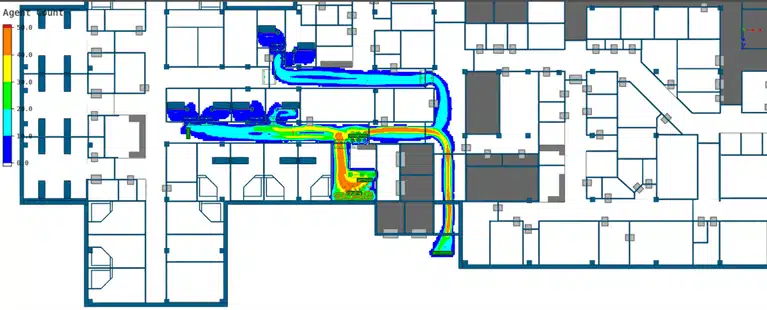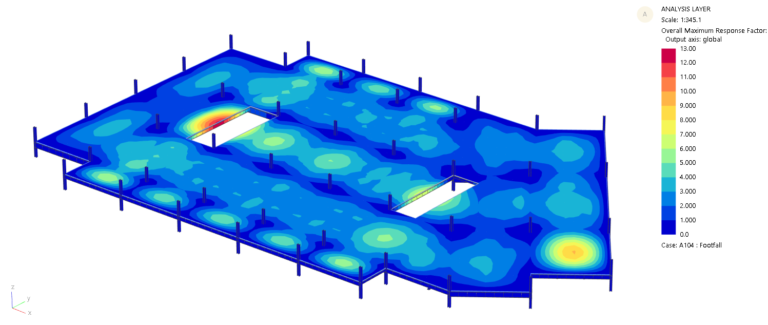
Imagine walking across a bridge or working in a high-rise office, unaware that every step you take has been considered as an important factor for the comfort and stability of the structure. Structural engineers are crucial for ensuring the resilience and safety of structures. One critical aspect that engineers must consider is the impact of human-induced vibrations. These vibrations, caused by pedestrians walking or running, can significantly affect the structural integrity and comfort of a structure, meaning every step we take, matters.
Footfall analysis is a dynamic structural analysis method that helps engineers understand and mitigate these vibrations. By leveraging advanced software like Oasys GSA, engineers can accurately model and analyse footfall impacts, leading to more informed design decisions and ultimately, more resilient structures.
In this article, we will walk in the footsteps of engineers who have demonstrated footfall analysis in a variety of environments where human-induced vibration has been carefully considered. Read on to discover practical examples of how advanced footfall analysis capabilities in GSA can be applied to a variety of structural designs.
Quality builds
High-specification offices and retail buildings, particularly those made from timber, need precise human-induced vibration analysis to satisfy client requirements. It's important to understand how your structure will respond to use. Will human-induced vibrations disturb the occupants or even hinder their work? Additionally, it's crucial to consider the environmental impact of your structure and the different scheme options. With GSA, you can measure embodied energy, carbon, and other factors.
When designing 8 Bishopsgate, a standout addition to the City of London’s skyline, Arup engineers assessed footfall induced vibration using GSA to ensure floor vibrations met industry guidance. The project garnered multiple accolades, including the BCO London Best Commercial Workspace 2024, CTBUH Best Tall Building in Europe 2024, and CTBUH Best Tall Building by Height (200-299m) 2024. It was also shortlisted at the New London Awards 2023 and the Structural Awards 2024.
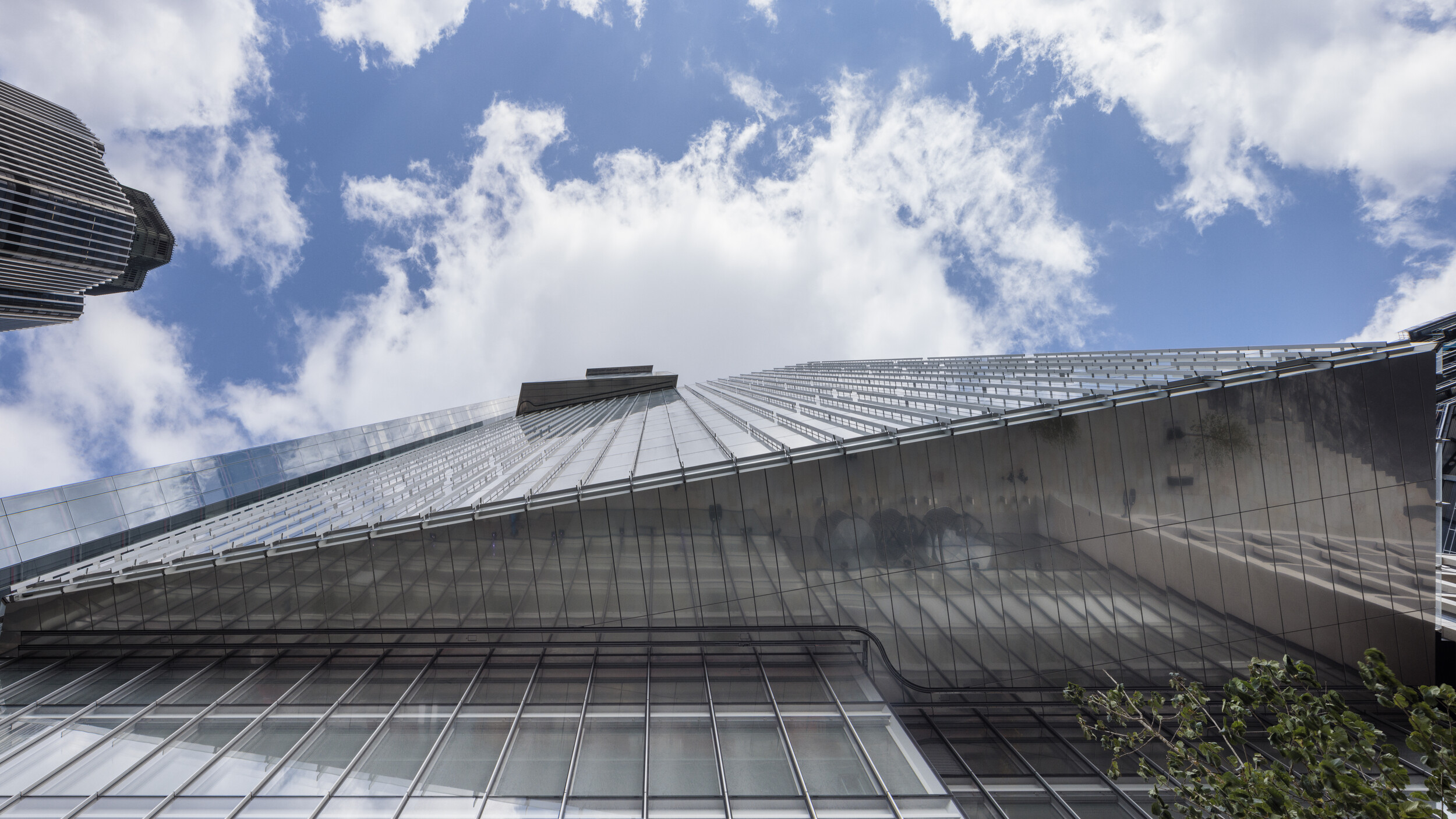
The high-rise building incorporates “Resotek”, an innovative visco-elastic membrane, on the ends of the secondary steel beams to improve the structural damping of the floorplates. This, in conjunction with the GSA footfall assessment, allowed the engineers to save an additional 500 tonnes of CO2 that would’ve been required to stiffen the beams.
Read the full case study.
The Haymarket project in Edinburgh exemplifies innovative engineering and architectural excellence. Engineered by Arup, this mixed-use development features two hotel buildings, three office buildings, and ground floor retail units. Set for completion in early 2025, the project has already been commended at the Structural Steel Awards and won awards at the Scottish IStructE Awards.
An engineering-led design approach was adopted to maximise the building volume above the tunnel while ensuring a buildable solution that manages potential risks to the railway during construction and throughout the building's lifespan. This approach included footfall analysis and wind sway assessments to minimise steel weight and meet footfall-induced vibration criteria.
Read the full case study.
Pedestrian bridges
Pedestrian bridges, especially those with longer and lighter spans, are more susceptible to vibrations caused by foot traffic. Excessive vibrations can cause discomfort to pedestrians, making the bridge unpleasant to use. By analysing footfall-induced vibrations, engineers can design bridges that provide a comfortable experience for users.
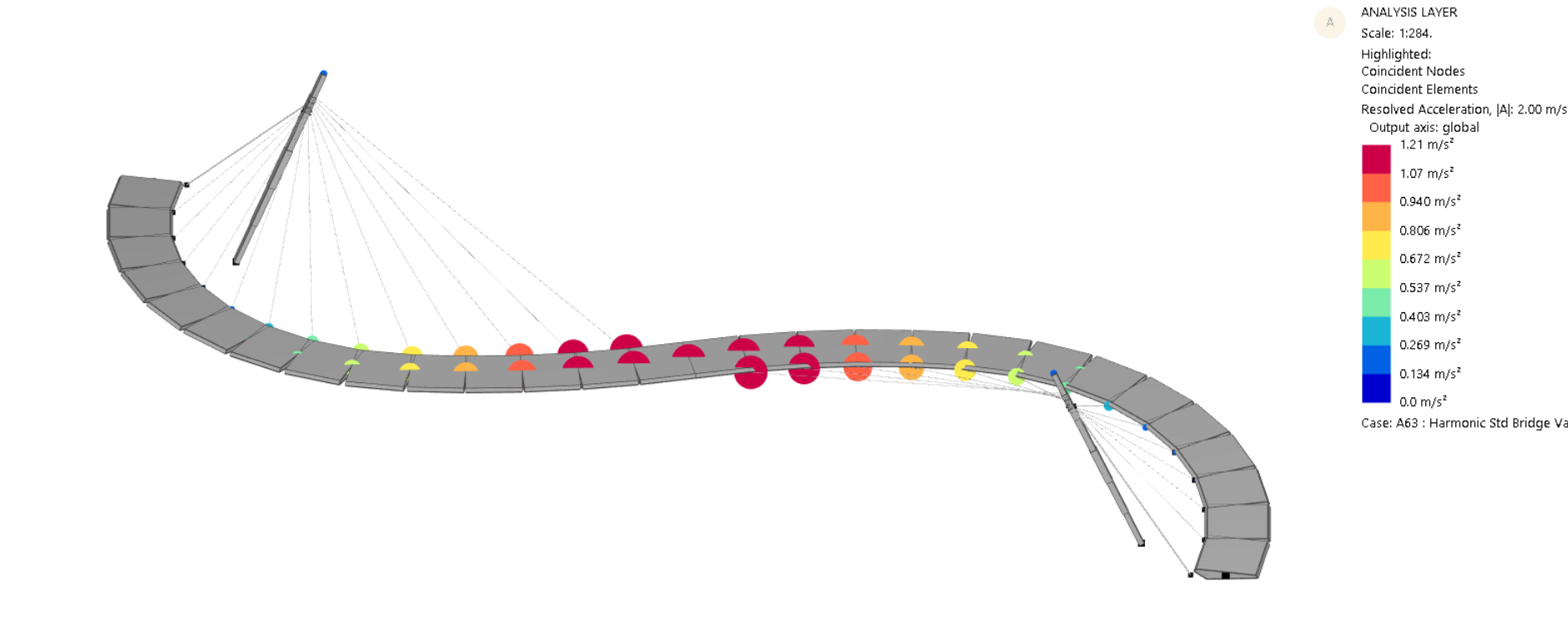
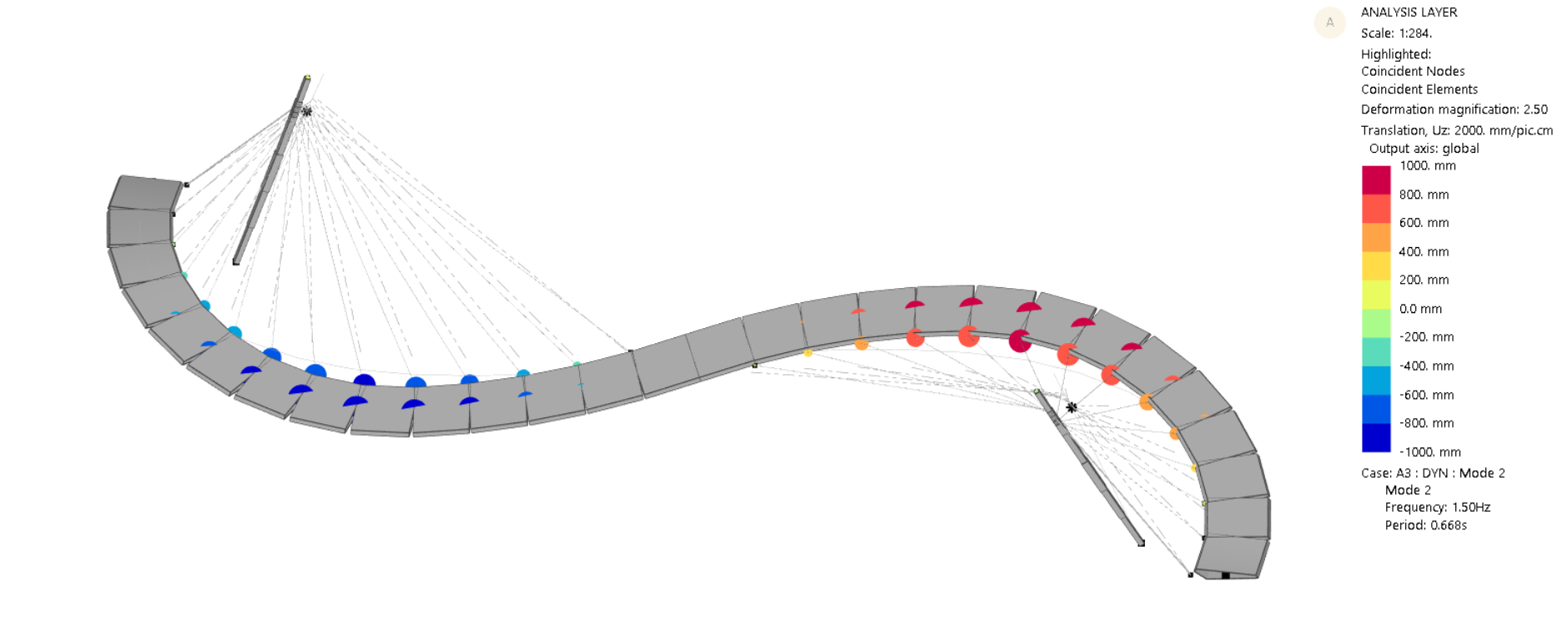
In Bad Hersfeld, Germany, schlaich bergermann partner (sbp) designed an 80-meter-long, 3-meter-wide pedestrian and bicycle bridge crossing the river Fulda. Inaugurated at the end of 2021, the S-shaped bridge connects paths between Johannesburg and Bad Hersfeld’s city centre, seamlessly integrating with the natural landscape. The team used GSA for the dynamic analysis of the bridge.
Due to its monolithic structure and materials, which include welded steel segments and suspension cables, the bridge has low inherent damping and can be easily stimulated to vibrate by pedestrian traffic. The natural frequencies were determined using GSA’s modal analysis. The loading model, based on the HIVOSS (Human Induced Vibration of Steel Structures) guidelines, incorporates a dynamic distributed load representing the equivalent pedestrian flow, with appropriate signs applied to all areas of the bridge. The loading, and consequently the number of pedestrians to be considered, are based on the selected traffic class. The resulting acceleration was then compared to the chosen comfort level.
Read the full case study.
Science, health and accuracy
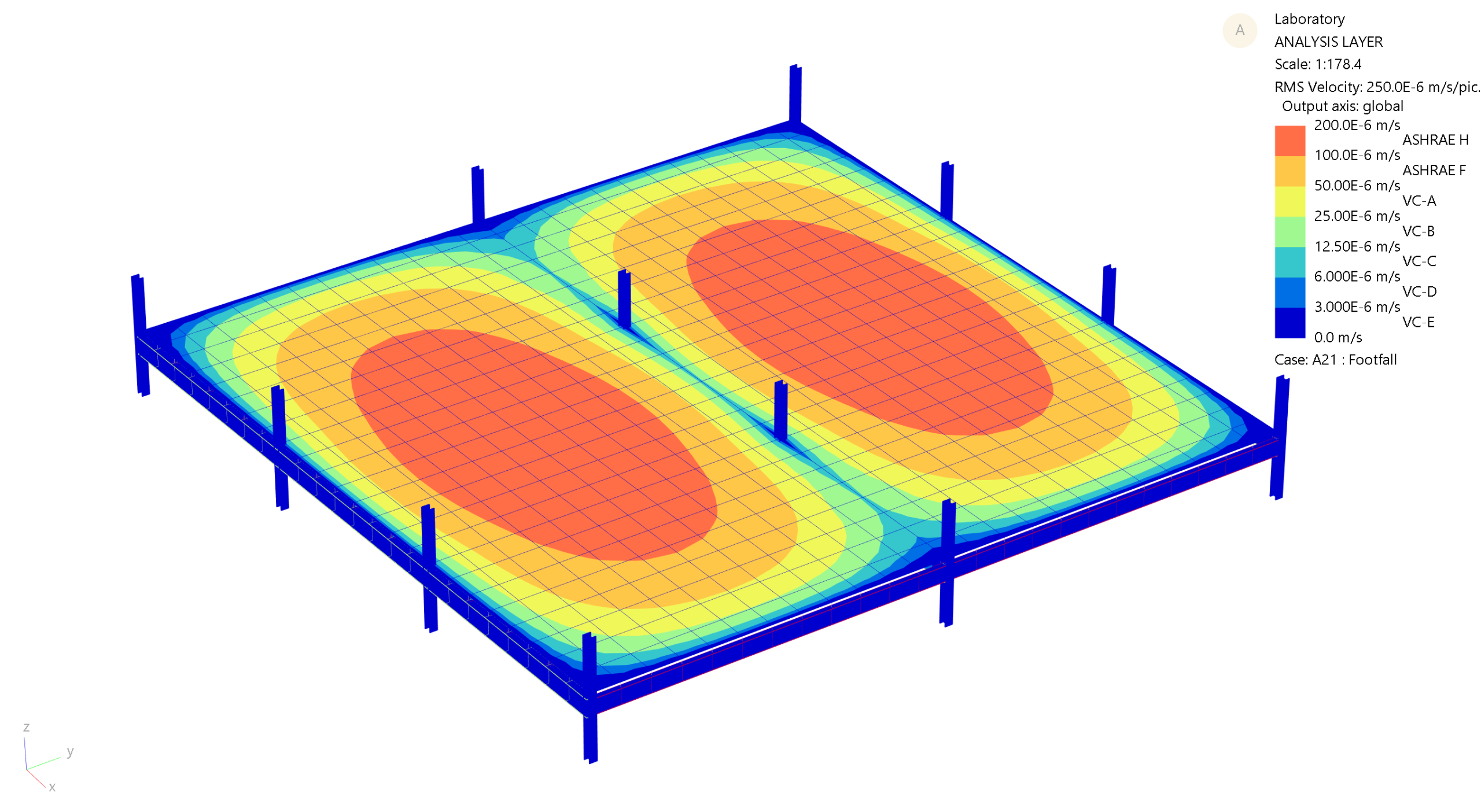
Concrete is usually chosen as the construction material to ensure strength and stability for laboratories and hospitals as they have exacting requirements for vibration control. This is to ensure the accuracy of their experiments and operations, especially when using sensitive electronic equipment such as microscopes. GSA can provide high levels of accuracy and flexibility when calculating human-induced vibration accelerations and velocities.
Arup's multidisciplinary design for Princeton University's new Frick Laboratory faced significant challenges, balancing stringent vibration and cleanliness requirements with the University's sustainability goals. The 24,620m², $280M laboratory is the second largest building on campus, designed to accommodate up to 360 researchers in two four-storey wings separated by a glass-roofed atrium running the full length of the building.
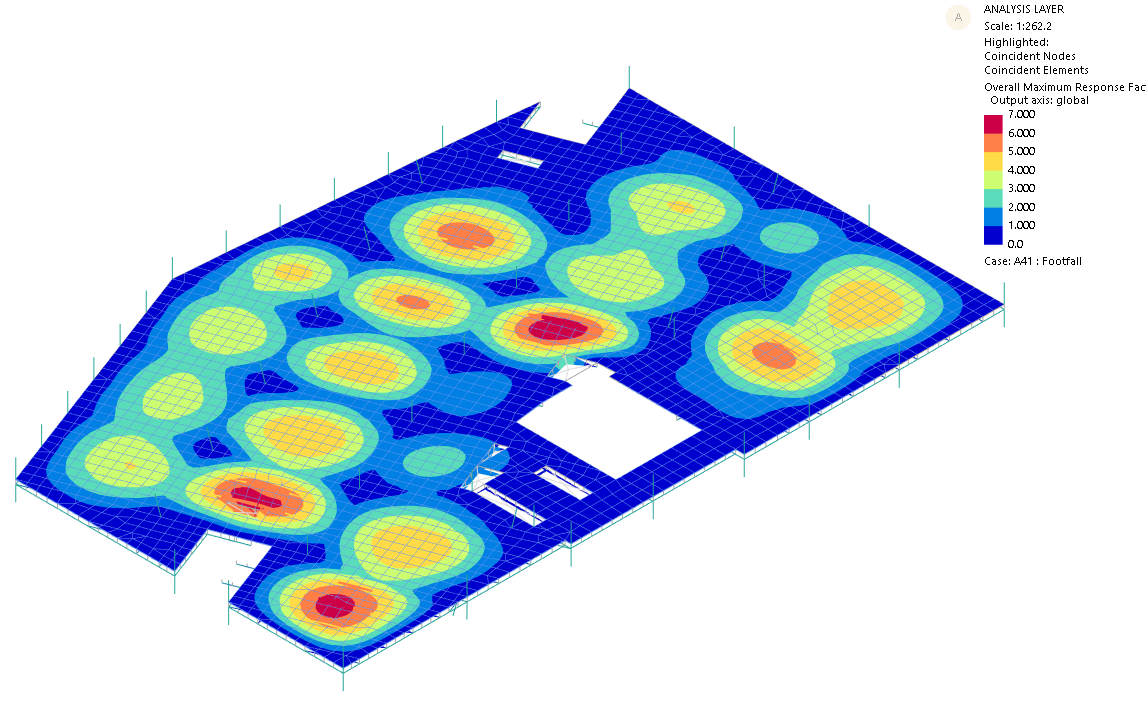
The team developed a series of vibration models in GSA to calculate floor movements under various footfall inputs. This approach led to a cost-optimised design by identifying areas with acceptable higher and lower vibration levels that met the University's criteria for the laboratories. The areas near columns, being stiffer, were designated to support more sensitive equipment, while corridors and cantilevered areas were allocated for non-critical use, where vibration limits could be exceeded. Additionally, the increased mass of the floor sections in the middle bays of the building balanced the stiffness throughout the floor framing, creating an efficient structural system that met the layout and performance criteria.
Read the full case study
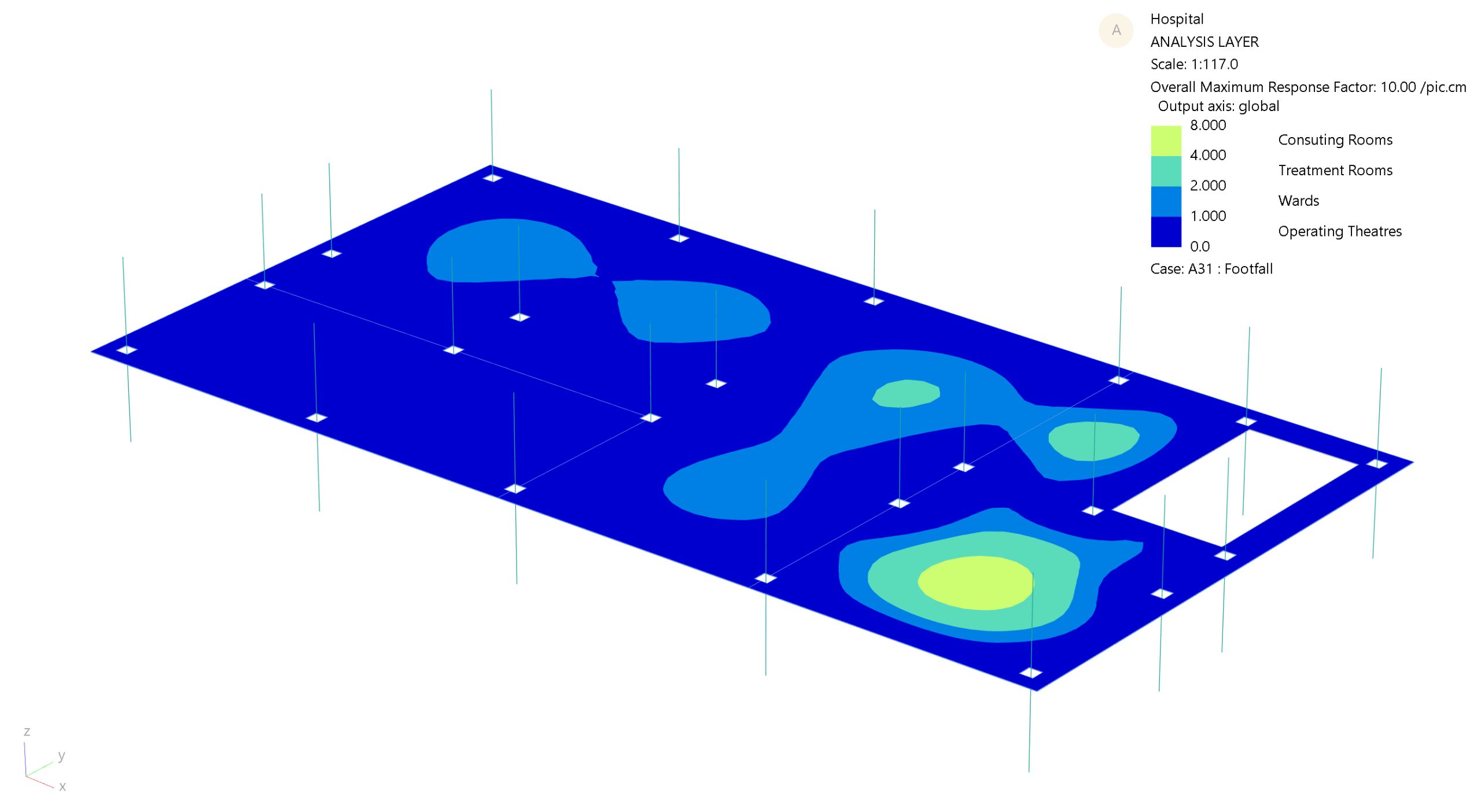
Like laboratories, hospitals with operating theatres are often constructed from concrete due to the need for extreme solidity. It's crucial that buildings where lifesaving operations occur are meticulously designed and built to the highest standards. Minimising vibrations is essential to avoid disturbing surgeons during their precise work. Using GSA, structural engineers can ensure accurate calculations when designing sensitive floor structures, maintaining the necessary stability and performance.
Large crowds and rhythmic activity
Arenas and stadiums, often constructed from steel, are designed to accommodate large crowds. For instance, audiences at music concerts or sporting events typically dance, sing along, or jump and cheer for their team. These activities create crowd excitation vibrations, requiring special consideration in the design process. Advanced analysis methods, such as time history and harmonic analyses using GSA, are essential to accurately calculate and manage these vibrations.
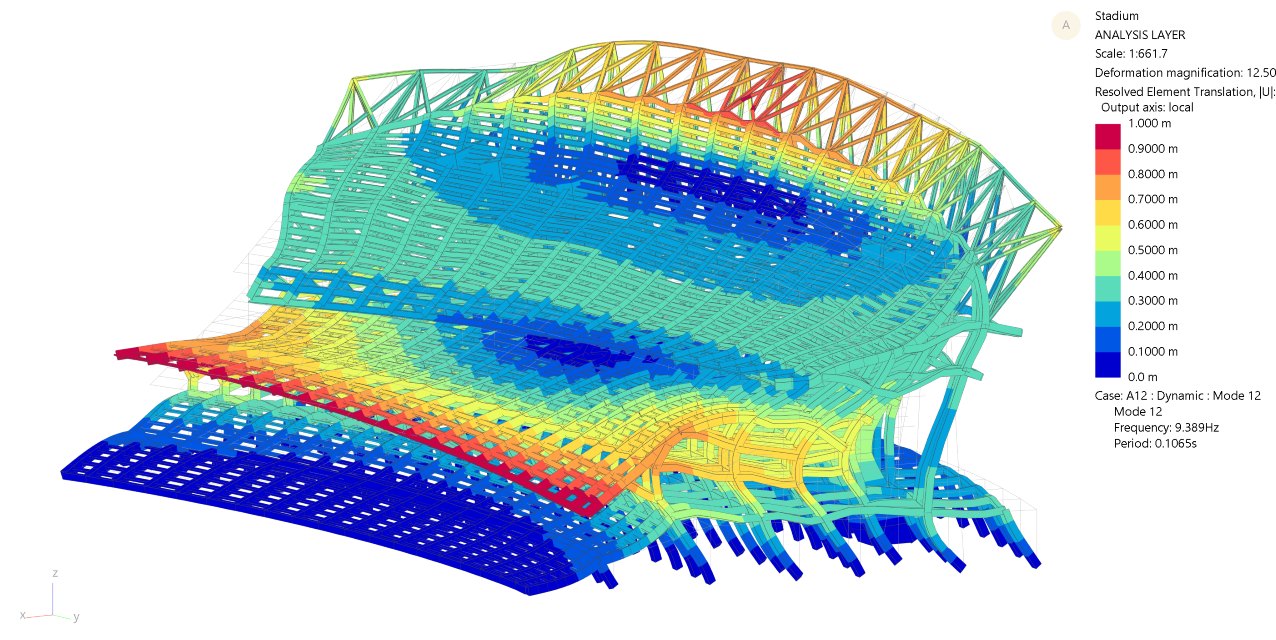
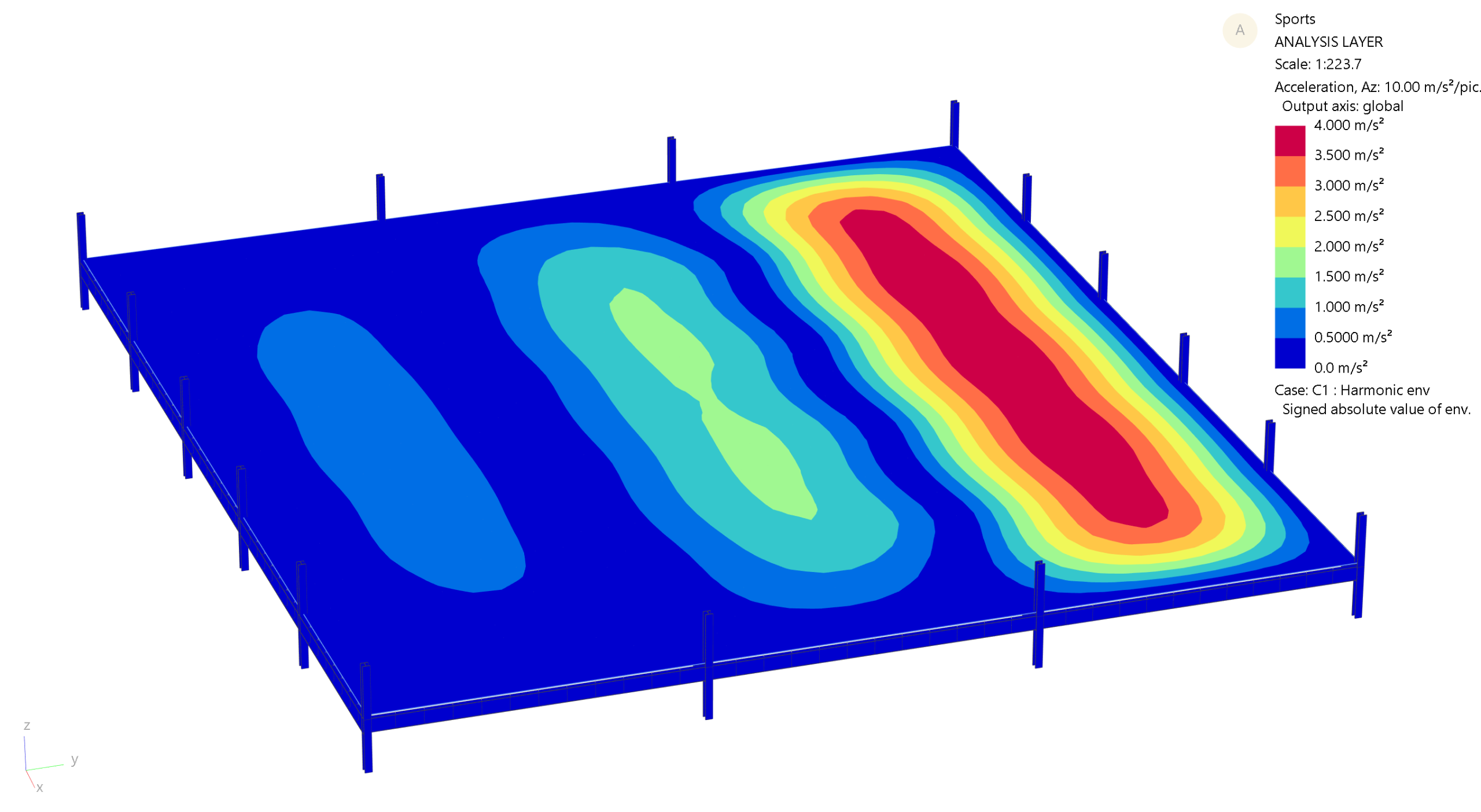
Buildings like sports halls and gyms are typically constructed using steel due to the need for long beam spans. These buildings differ from others in terms of human-induced vibrations because many activities, such as aerobics and dance classes, are coordinated and harmonised. These activities can cause resonance with the structure's natural frequencies, causing the floor to bounce. Additionally, weightlifting in gyms can create transient vibrations when weights are dropped on the floor. GSA accurately handles both harmonic and time history dynamic response analysis, ensuring reliable performance in these scenarios.
IStructE blog post
Read our sponsored blog post with the Institution of Structural Engineers to learn more about the different examples of where footfall analysis is considered.
Discover GSA
Learn more about our all-in-one structural design and analysis software.