The last 50 years have brought meaningful progress for women in STEM. More women are entering technical careers. More women are visible in project teams, classrooms and leadership conversations. More organisations are recognising that diversity in engineering is not a side issue; it’s central to better ideas, stronger teams and more inclusive outcomes.
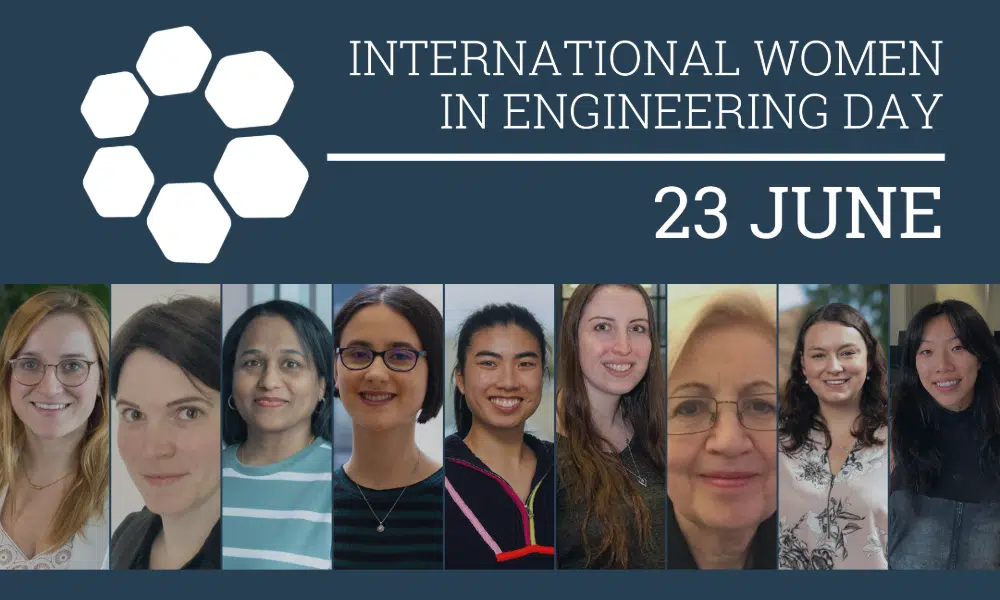
The contributors to this International Women in Engineering Day (INWED) 2026 series are clear: progress must continue. The next 50 years cannot only be about encouraging more women and girls to choose STEM. It must also be about ensuring women can stay, progress, lead and shape the future of engineering intelligence.
From access to retention and progression
Access, outreach, apprenticeships, education pathways and early-career opportunities are essential, but women also need workplace cultures that support long-term growth.
Arup Transport Planner, Paula Godoy, says, “While progress is clear, it’s important to continue addressing persistent structural barriers, particularly in retention, progression, and workplace culture, so more women can not only enter STEM, but also thrive and lead within it.” Arup Data Scientist, Hannah Mehr, shares a similar hope: “We need to ensure all women can enter, progress and thrive in STEM, regardless of their background. Just as importantly, we need to retain women in these fields by creating environments where they feel supported, valued and able to grow.”
That shift from access to retention is essential. It’s not enough for the engineering sector to attract more women if workplace cultures, progression routes or leadership structures make it difficult for them to stay.
Representation at senior levels
Several contributors point to the importance of women in senior engineering and technical leadership roles. Representation at entry level is important, but representation in the places where decisions are made, expertise is recognised and future priorities are set is just as vital.
Oasys Geotechnical Applications Specialist, Sissira Pereira, hopes “to see true equality at senior levels and environments where women can confidently lead, innovate, and shape the future of engineering and software without barriers.” Olivia Yee adds that “women in leadership positions sends a powerful message to younger women around the world. It challenges outdated perceptions about who belongs in influential positions and creates a platform for diverse voices to be heard.”
Arup Senior Engineer, Saoirse Goodwin, also highlights the importance of recognition: “I’ve raised publicly that the Arup Fellows remain disproportionately male, and I think that matters, because the people that we celebrate as our best, shape what the next generation believes is possible for them. I’d like the next 50 years to close both gaps, so that both the foundations and the flagships of our field are as representative as the industry is becoming.”
Visibility at senior levels affects more than individual careers. It shapes what the next generation believes is possible, who feels encouraged to aim higher and whose expertise is seen as defining the future of engineering.
Flexible working and inclusive cultures
The next 50 years of women in STEM must also include practical changes that support different life stages and responsibilities. Flexible working, hybrid working and inclusive workplace cultures are not only benefits, they can be essential to retaining talented engineers, developers and technical specialists.
Arup Fellow, Helen Campbell, points to hybrid working as a positive development in software: “One bright point has been the advent of hybrid working which has given women a degree of flexibility that has made work-life balance and their caring responsibilities manageable – particularly in a field like software where working hours tend to be open-ended. I hope this will continue.”
DC Partnership Crowd Modeller and Senior Consultant, Olivia Yee, also reflects on the importance of work-life balance for future generations: “To all mothers in the work place, I think you are amongst the most dedicated and adept professionals and I hold deep admiration for you. Your presence is essential in the industry and I can’t imagine the challenges of balancing producing high quality work with the responsibility of being a primary career giver. I believe the decisions we make to support work-life balance and flexible working for everybody are not only important for women but also for future generations to come. I believe the decisions we make to support work-life balance and flexible working for everybody are not only important for women but also for future generations to come.”
Flexible working alone cannot solve every barrier, but it can help create a more sustainable engineering profession. When people are supported to do excellent work alongside the realities of life, more talent can remain in the field.
Technology, AI and human creativity
The future of engineering and software development will also be shaped by technology. Artificial intelligence, automation, advanced analysis and digital engineering tools are changing how technical work is done, but contributors were clear that the human element remains central.
Helen Campbell reflects on the changing nature of software roles: “In the past 50 years the sector has grown exponentially - not just the numbers of people working in it but also the differentiation into a wide range of roles requiring different skills. It’s not just coding anymore! And that’s provided women with more options although there are still disappointingly few in roles such as architecture, or cloud infrastructure, or networking.”
She also looks ahead to the impact of AI: “The advent of AI is changing the sector again. I can’t imagine what I’d be writing for this event in 5 years' time let alone 50. I do believe though that even if we outsource the coding and QA to AI, new products and systems require imagination and creativity and that for now, and hopefully years to come, rests with us humans.”
Firefly Creations Co Owner and Executive Producer, Michelle Hicks, sees the same period of change as an opportunity for learning and innovation: “This is an incredibly exciting time to work within engineering as we have an unprecedented level of technology opening the door to solutions that would never have been possible previously. The most exciting part is the continual learning opportunity, both for experienced and up and coming professionals, and the opportunity for knowledge sharing between generations.”
This is where the INWED 2026 theme, Engineering Intelligence, feels especially relevant. The future will require technical expertise, but also creativity, ethical judgement, collaboration and inclusive leadership. Smarter tools will matter, but so will the people who are deciding how those tools are used.
The next 50 years of engineering intelligence
The next 50 years of women in engineering and wider should not be defined only by participation. They should be defined by progression, leadership, recognition and influence.
Engineering has always been about solving complex problems. To do that well, the profession needs women at every level: entering, staying, leading, innovating and being recognised for the intelligence they bring. It needs technical skill, but it also needs lived experience, creativity and the confidence to ask different questions.
At Oasys (Ove Arup Systems), we’re proud to be part of Arup’s global engineering community that continues to evolve, not just in what we build, but in how we work, collaborate and grow. As we look to the next 50 years, the opportunity is clear: to create an industry where everyone has the space to succeed, contribute and lead towards a better built environment.
Continue the conversation
Read the other blog posts in this series to learn about contributors past and present experiences of being women in STEM.