As part of our Oasys 50 celebrations, we’re revisiting the early days of engineering software through the people who helped shape it.
When Andrew Wilkinson joined Arup in September 1978, the idea of interactive, desktop-based engineering software was only just emerging. At the time, most complex analyses were run on large mainframe computers, occupying entire basement spaces.
But a shift was underway.
Building software with constraints and creativity
After three weeks of what he describes as ‘grad school’ involving learning about the firm, what it stood for and the various departments that made up Arup, Andrew was assigned to work in Arup’s Research and Development (R&D) group for 12 months. There, Andrew contributed to the development of early analysis and design programs for a new generation of desktop machines. These systems, with memory measured in kilobytes rather than gigabytes, required engineers to think differently.
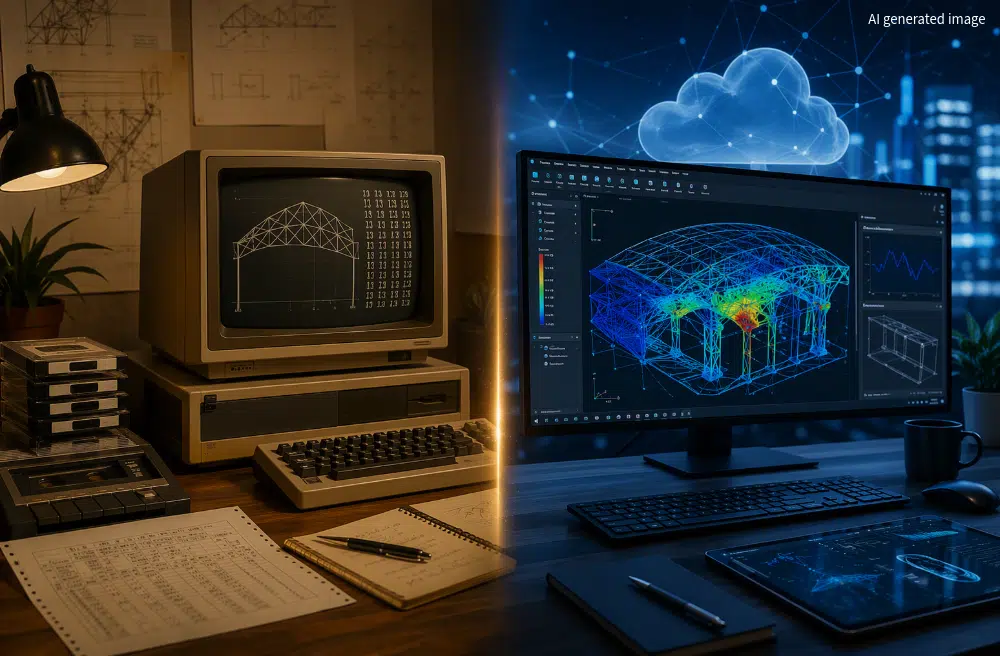
Andrew recalls the tools Arup had at the time, “Back in the 1970’s most major analyses were carried out on the firms DEC10 computer (at least I think it was called this) which took up considerable basement space.” As the first desktop machines were starting to emerge on the market, Arup chose to go with Hewlett Packard computers and in 1978 the latest HP9845 was purchased.
Andrew recalls that the program’s analysis and design results were stored on essentially cassette tapes which were inserted into the ‘drives’ above the keyboards (as seen in the image below) and a roll of thermal A4 paper would print the output.
“A much earlier version was the HP9810 which was the size of a small shoe box, and, from memory, programs were stored on a short length of magnetic tape which were fed into the ‘computer’. The only person I recall using one of these was John Blanchard. The first time I came across it was when I went to his desk to ask him something and while standing patiently for him to become free, I heard a quiet ‘whirring’ noise coming from one of the drawers in his desk. When it stopped, he pulled open the drawer and extracted a thin strip of paper with (presumably) the results of whatever he was working on. [I was] lucky enough to use the very latest upgrade, the HP9845. But this was a far cry from today’s desktop computers.”
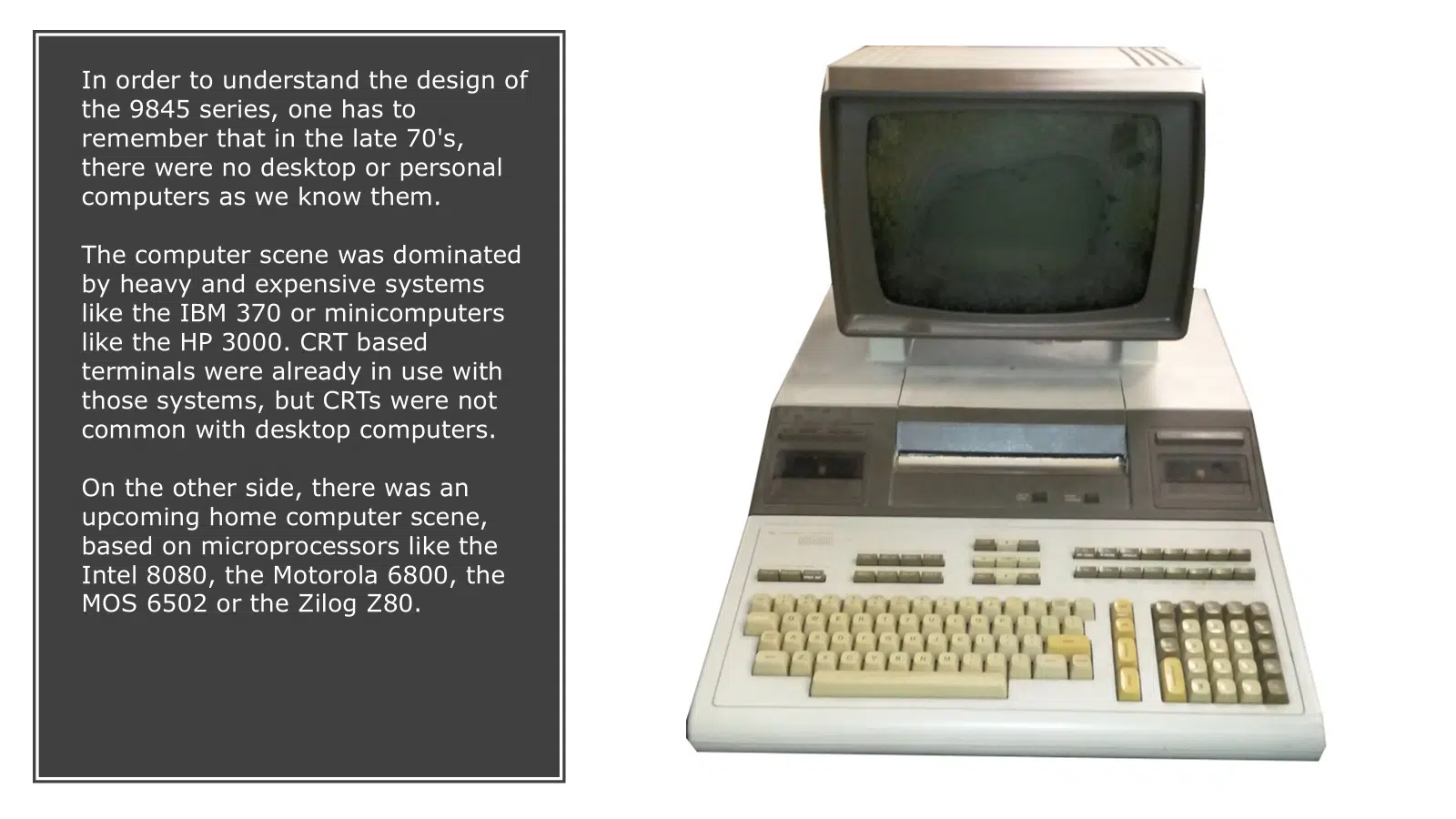
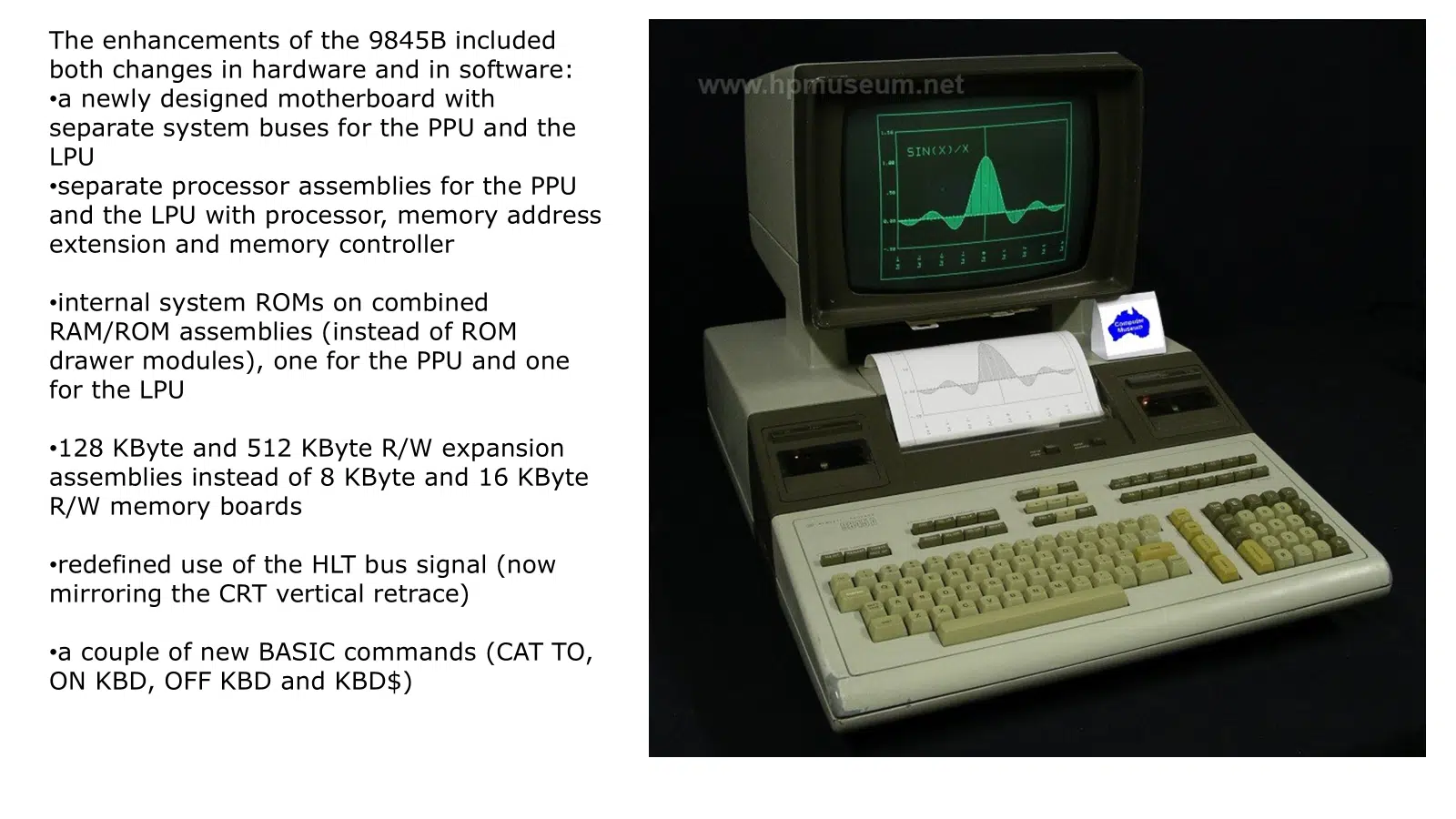
“The 9810 only had a memory capacity of 2K, the 9830 increased this to 8K whilst the 9845 had a whopping 64K although the top-of-the-line version which came later in the year had 192K!”
He explains that the program language was called BASIC and although simple, developers constantly refining code to fit strict memory limits. It wasn’t just about functionality; it was about usability too. Teams were already focused on creating software that engineers could use effectively, producing clear outputs and documenting the theory behind their tools.
A culture of problem-solving
For Andrew, what stands out just as much as the technology is the people. He recalls a culture shaped by curiosity, collaboration, and a shared commitment to solving difficult problems. He was told that one colleague famously described his role simply as “solving difficult problems”, a mindset that defined the team.
There was also room for personality and humour. Work submitted for review to one colleague would return with a simple hand drawn seal with a ball on its nose at the bottom as a “seal of approval”, a small but memorable mark of recognition from respected peers.
From early tools to global impact
The software developed during this period laid the foundations for what would become Oasys (Ove Arup Systems) as it is today. Early programs for beam, slab, and section analysis were tested rigorously, sometimes pushed to failure, before being shared more widely across the firm and beyond.
“The software was always intended to be made available commercially and it was important that it was made 'user-friendly' - Eventually GSA and ADC etc. superseded most of the structural programs.”
By the end of the 1970s, this work had already begun to generate commercial value, marking the start of Oasys as a product business. Today, Oasys tools support engineers around the world, tackling complex challenges with speed and precision. But at their core, they still reflect the principles established in those early days: innovation within constraints, a focus on usability, and a culture built around solving problems.
When the programs were ready to go, they were put through a test of robustness where one of Andrew’s colleagues would try to break the software… often successfully he notes. Once it had been cleared in testing, it could be released to the wider firm and made commercially available via what is now Oasys. He also recalls that some of his time was also spent responding to queries from external users and resolving any issues arising from use of the software.
Andrew expresses that his introduction to Arup was made pleasant by his experience within R&D, and it also brought back some other fond memories of his time at the firm: “It was a very enjoyable introduction to a career in Arup and brings back other memories such as the 30p per day ‘luncheon vouchers’ included in our first salary packages.”
Stories like Andrew’s remind us of where Oasys began with curious engineers, creative problem-solving, and a determination to make complex analysis more accessible. The work Andrew and his colleagues contributed to those early years helped shape the software we develop today and set a spirit of innovation that continues to drive us forward. We’d like to thank Andrew for sharing his memories and helping us celebrate 50 years of Oasys.
Oasys 50
Check out our 50 years of Oasys timeline.