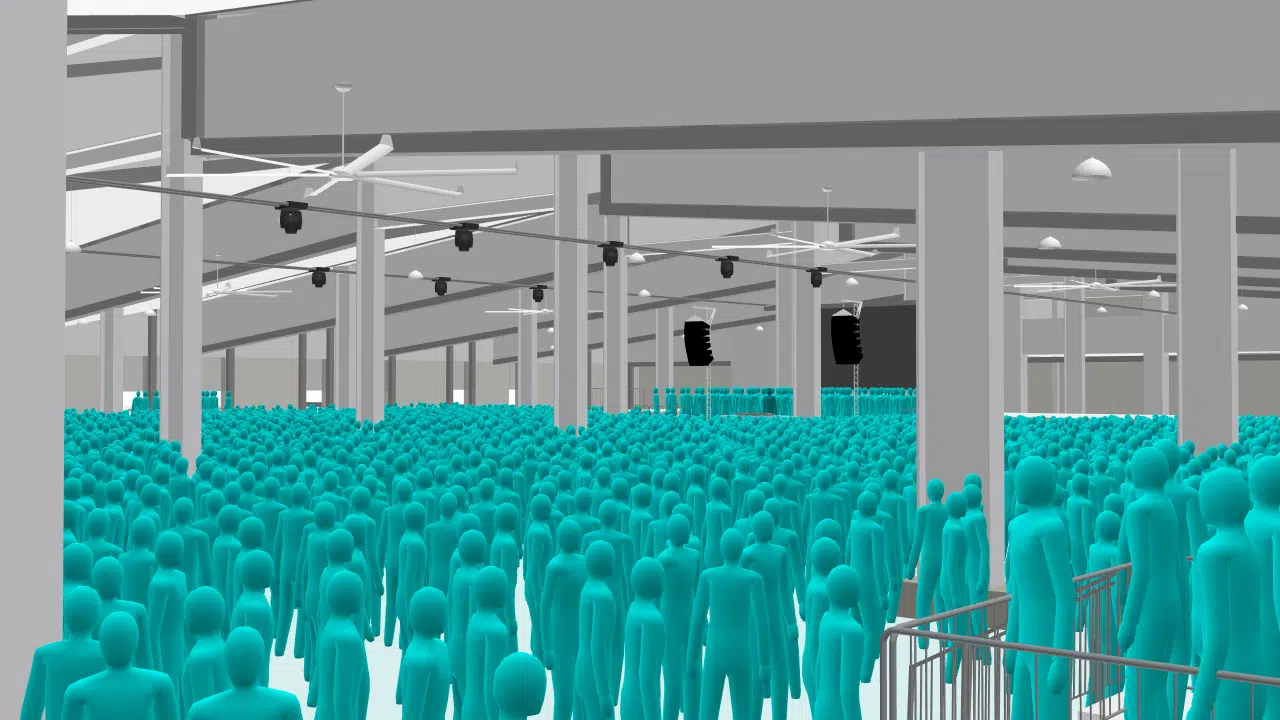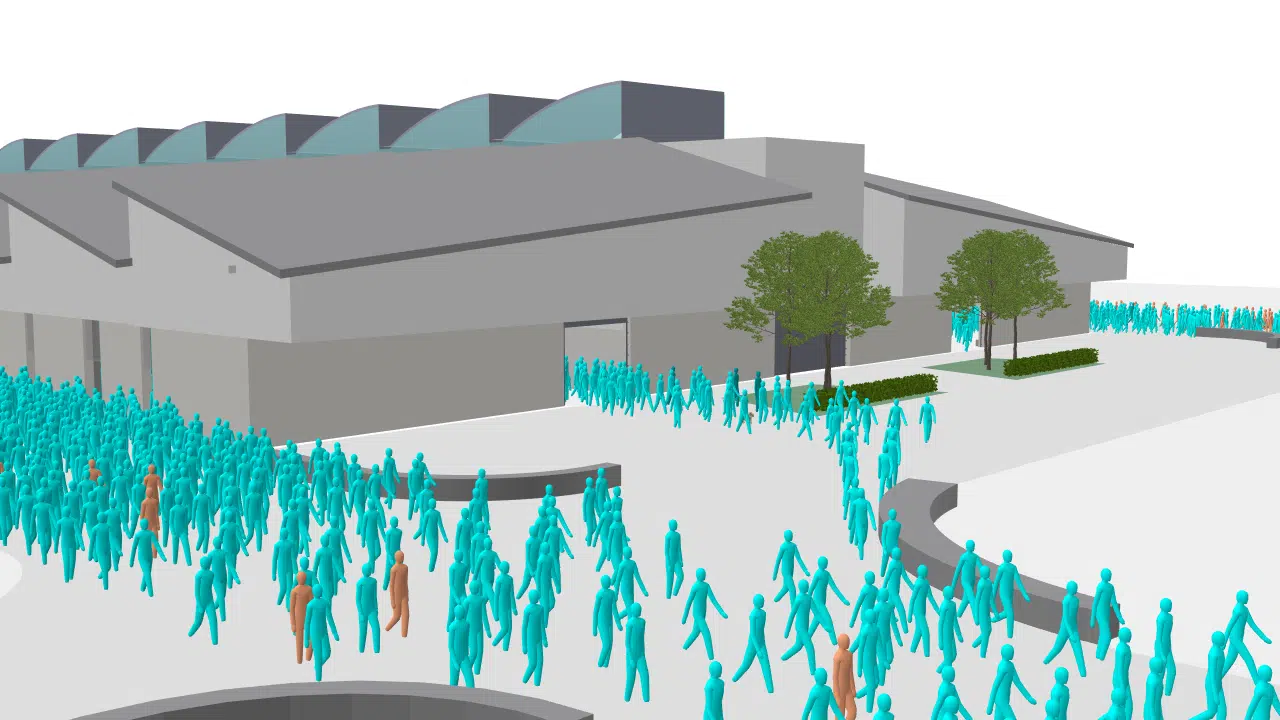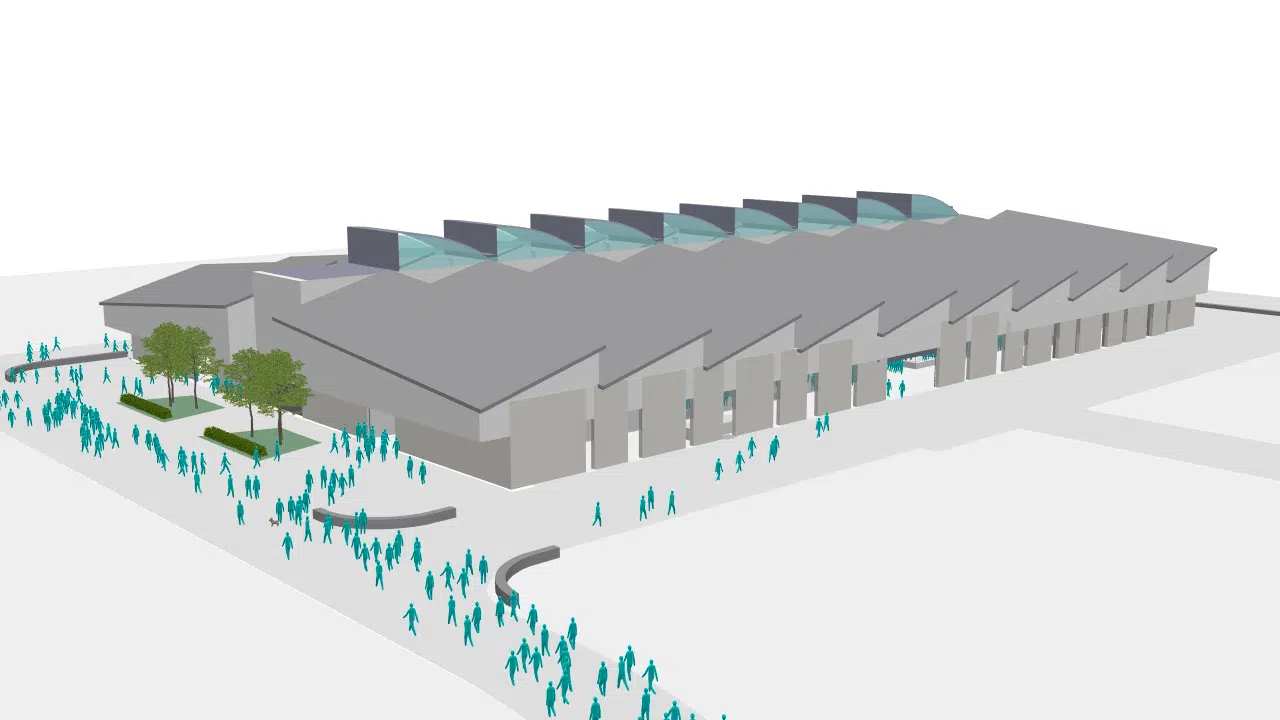
Munro Pavilion, also known as Munro Warehouse, is a ~6,600 sqm event space at Sydney Showground. Originally built as livestock exhibition space for the Sydney Royal Easter Show, its industrial character has made it a distinctive setting for concerts, festivals, product launches and film shoots, including Boiler Room's Sydney sessions in recent years. But a building that wasn’t designed with the intention of holding large crowds or entertainment use brings its own technical challenges, and with demand from promoters continuing to grow, Sydney Showground asked DC Partnership to investigate the venue's event capacity, looking closely at crowd density, life safety and fire performance.
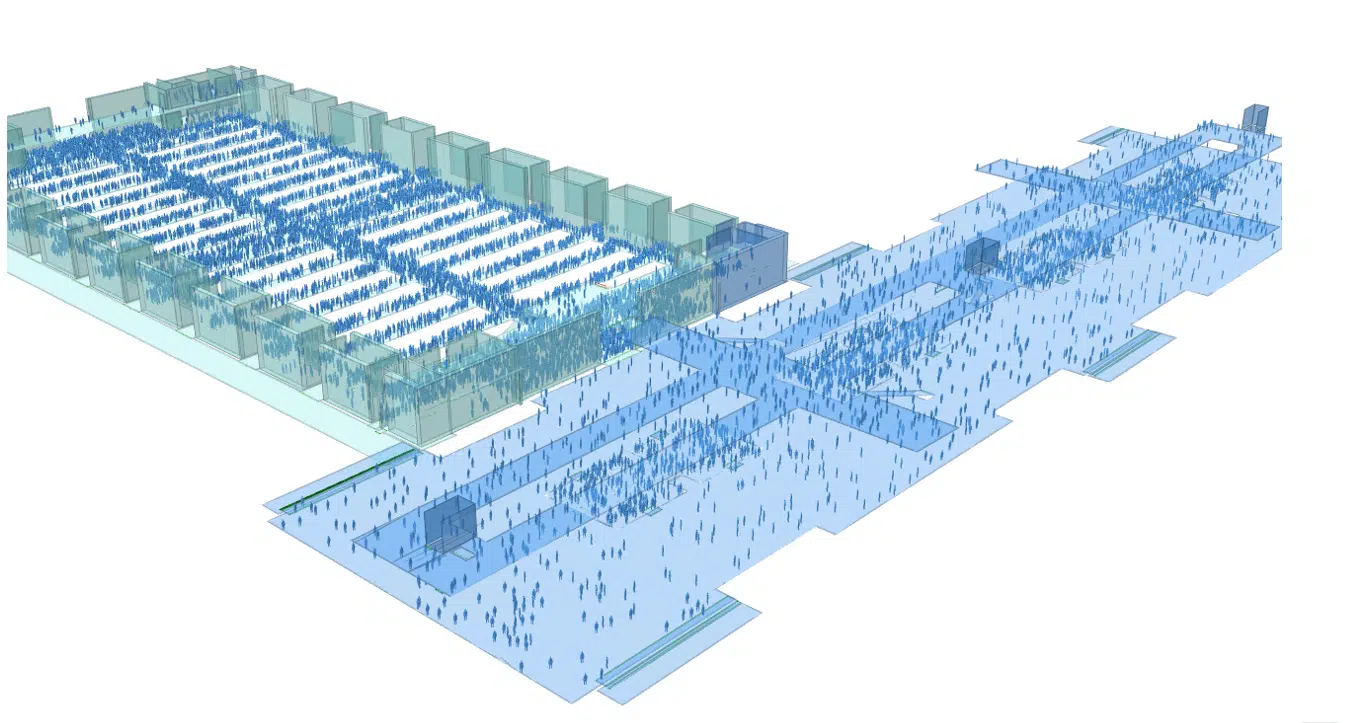
The CrowdEx and Fire Safety Engineering teams ran a combined study, pairing fire and smoke modelling with dynamic crowd simulation to understand how patrons would move and evacuate under different crowd populations. Rather than relying on standard evacuation assumptions, they modelled human behaviour responses, including how quickly and in what order patrons would respond to a fire depending on their proximity to it.
The outcome from the study gives Sydney Showground a clear, evidence-base of how crowd and fire behaviour interact at different capacities, supporting internal decision-making and conversations with promoters about hosting bigger events at the venue, backed by a recommendation for further operational and risk-based analysis before any capacity increase is confirmed.
Combining fire safety and crowd simulation
The study brought together two complementary streams: fire and smoke modelling in PyroSim Fire Dynamics Simulator (FDS), and dynamic crowd modelling in Oasys MassMotion. By linking these workstreams, DC Partnership could explore how fire conditions, route availability and crowd movement interact during an evacuation. MassMotion agents were configured to reflect realistic crowd behaviours, including hesitation, delayed response and phased evacuation.
Modelling realistic evacuation behaviour
MassMotion was used to simulate patron movement, crowd densities and evacuation performance across different crowd population sizes. Instead of relying only on standard evacuation benchmarks, the team modelled behavioural factors such as proximity-based decision-making. Agents closest to the fire began evacuating first, with others responding as conditions developed, rather than assuming every patron would move as soon as an alarm sounded. FDS outputs showing when evacuation routes became untenable due to smoke and heat were input directly into the MassMotion model, allowing the crowd simulations to reflect changing route availability based on actual fire conditions.