How can large-span spaces meet stringent safety requirements without compromising spatial openness or freedom? As the largest modern intelligent exhibition venue in Central and Western China, Zhengzhou International Exhibition and Convention Centre Phase II offers a compelling answer to this question.
The project occupies a site area of approximately 610,000 square meters. It comprises 13 standard exhibition halls, three multi-functional halls, a main entrance hall with two secondary entrance halls, together with supporting facilities including catering facilities and underground parking. An approximately 1.7-kilometre east–west central concourse connects all these components, forming a comprehensive large-scale exhibition and convention destination.
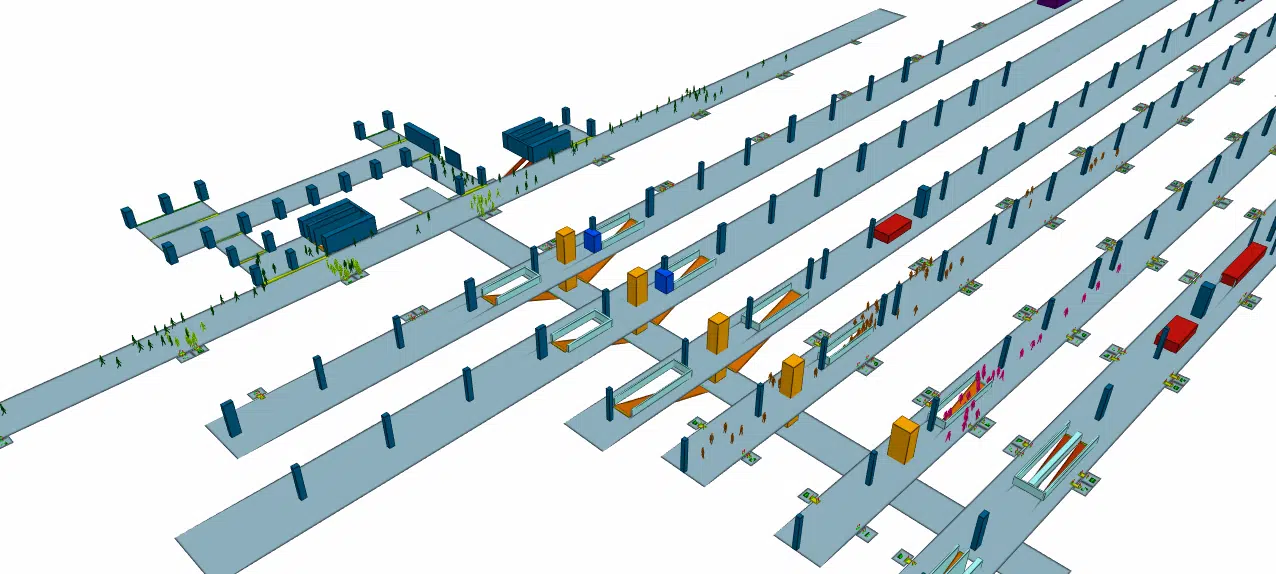
Arup engineers provided innovative fire engineering solutions for the project, that balance fire safety, operational efficiency, and architectural expression, offering new design approaches for large-scale exhibition spaces. Using pedestrian simulation software, Oasys MassMotion, they were able to optimise different areas of the building whilst delivering unified fire safety solutions for the whole structure.
Innovative fusible ETFE strategy enables simplified design
Ethylene Tetrafluoroethylene (ETFE) membrane structures were introduced above the central concourse and entrance hall to enhance spatial transparency and create a lightweight, contemporary architectural expression. As a recyclable and reusable material, ETFE is considered one of the carbon-neutral materials promoted in China. Its excellent light transmittance allows abundant natural daylight into the space.
The adoption of ETFE membranes also brought significant benefits to the fire safety strategy: It eliminates the need for traditional fire separations within the central concourse and between adjacent buildings, enabling uninterrupted, fully open public volumes and creating a seamless spatial experience.
On this basis, the engineers further developed a refined zoned activation strategy for the ETFE membrane. It is designed to rupture locally in response to the fire source location, such that only adjacent zones are activated while the remaining areas retain their integrity. This strategy ensures fire safety whilst minimising the impact of localised fire events on the overall building environment and lifecycle operations, reflecting an efficient, targeted and sustainable performance-based fire engineering approach.
Special fire compartmentation for connected flexible exhibition spaces
The project includes 16 exhibition halls, each spanning approximately 10,000 to 20,000 square metres, all designed as column-free, large-span spaces. The engineers adopted special fire compartmentation measures that avoids introducing fixed physical fire barriers within the space. This approach preserves uninterrupted sightlines and delivers a seamless exhibition experience.
To address the challenge of extended evacuation distances in large-scale exhibition halls, a performance-based fire engineering approach was implemented.
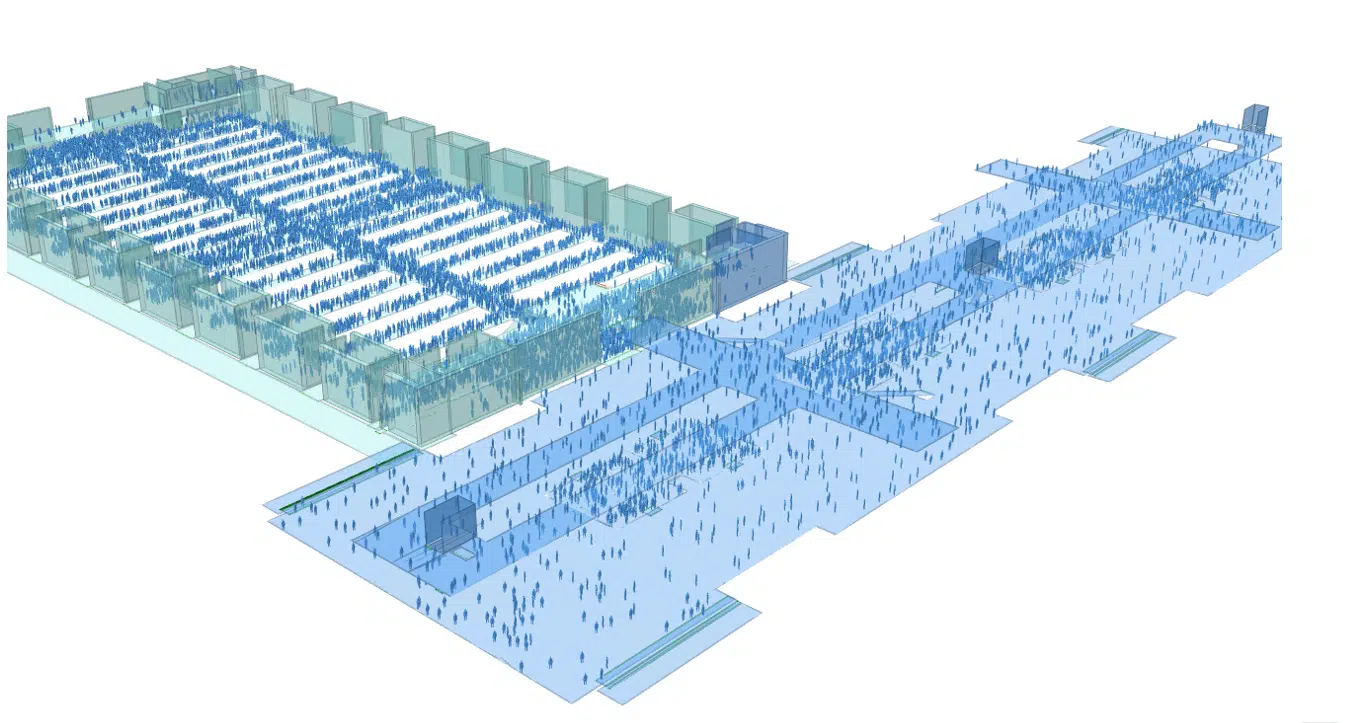
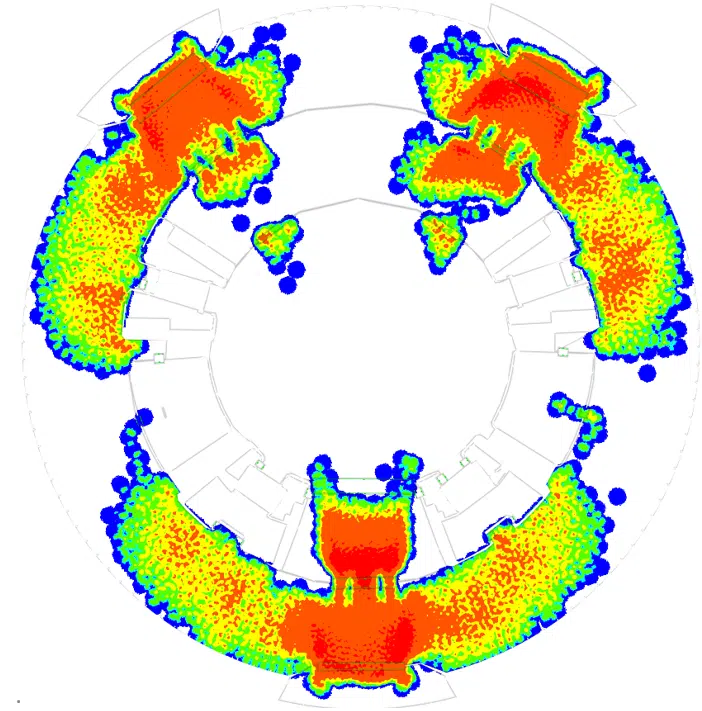
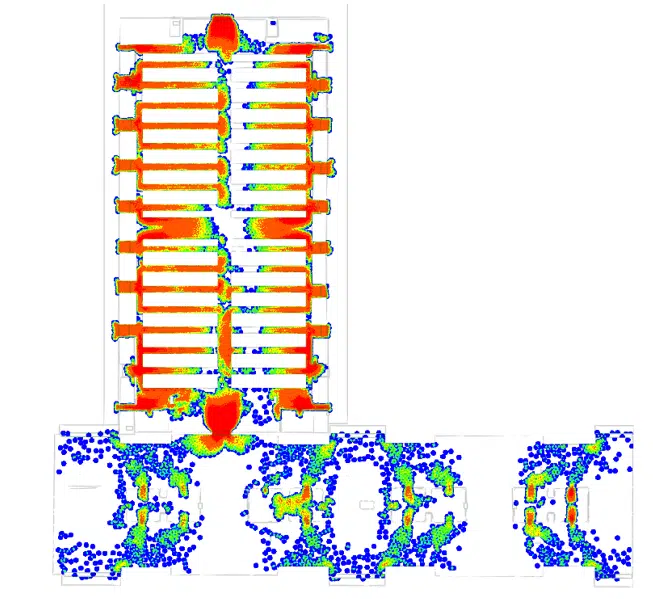
Through detailed evacuation simulations and quantitative analysis using MassMotion, the engineers verified the effectiveness and reliability of the evacuation strategy, resolving key challenges associated with fire safety design in ultra-large spaces and ensuring occupant safety.
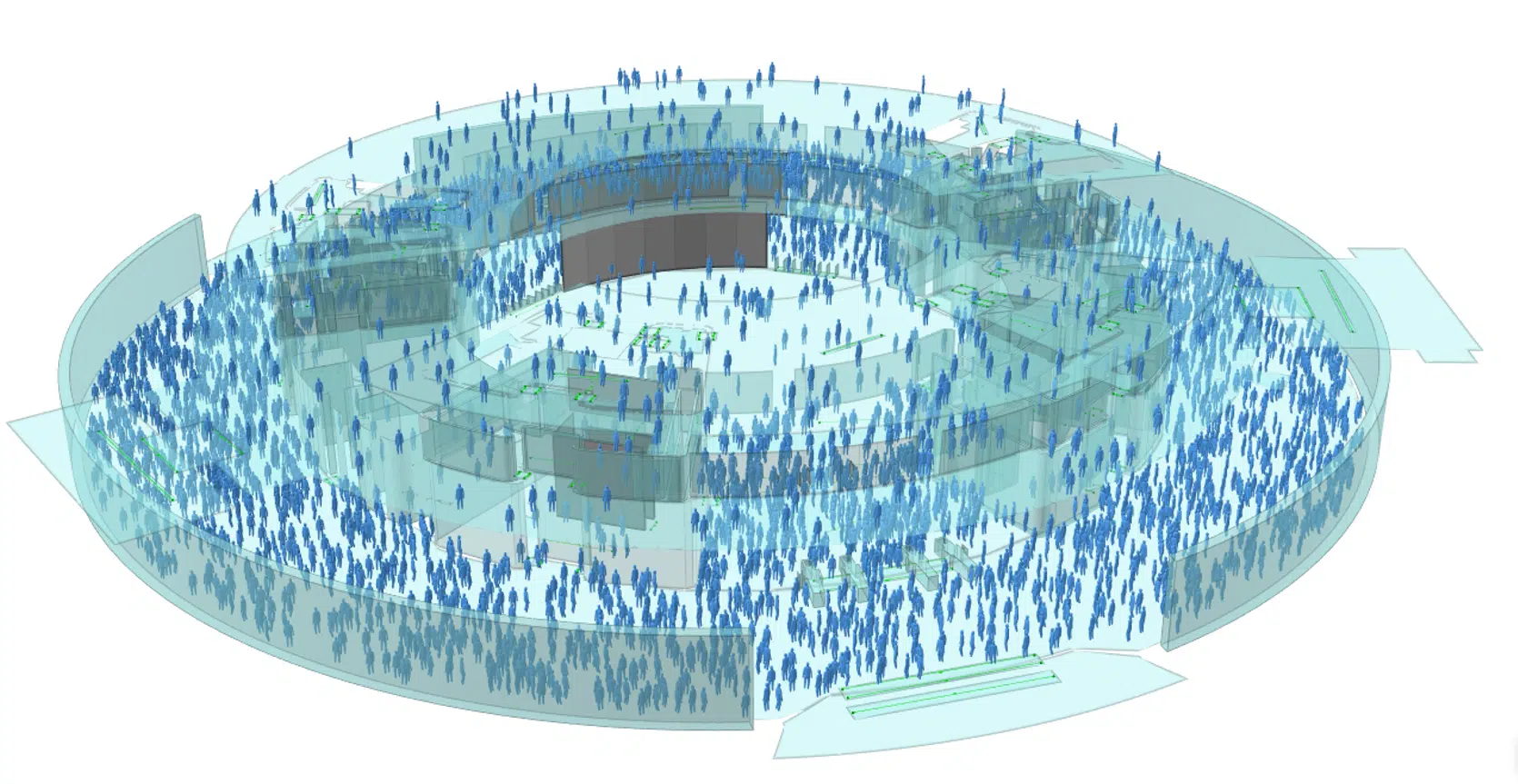
Occupants were assigned within the model according to the functional layout of different areas. The simulations evaluated the time required for occupants to evacuate from rooms and reach safe zones, such as staircases or outdoor areas. Adverse scenarios, including the potential unavailability of certain staircases, were also considered. The results were used to validate the effectiveness of the proposed evacuation strategy.
Arup also carried out fire resistance analyses for key steel structural elements within the exhibition halls, main entrance hall and central concourse, supported by the targeted application of a new generation of intumescent fire protection coatings. Featuring a thin, and smooth finish, the coating significantly reduces construction complexity while achieving a high-quality architectural appearance.
By applying a systematic and forward-looking fire engineering approach, the team helped the project achieve a careful balance between safety, efficiency and spatial quality, demonstrating how integrated design thinking can unlock both technical performance and architectural ambition in large, complex developments.
For more information about this project, contact Arup engineers Gui-Lan Zhao and Tina Liu.