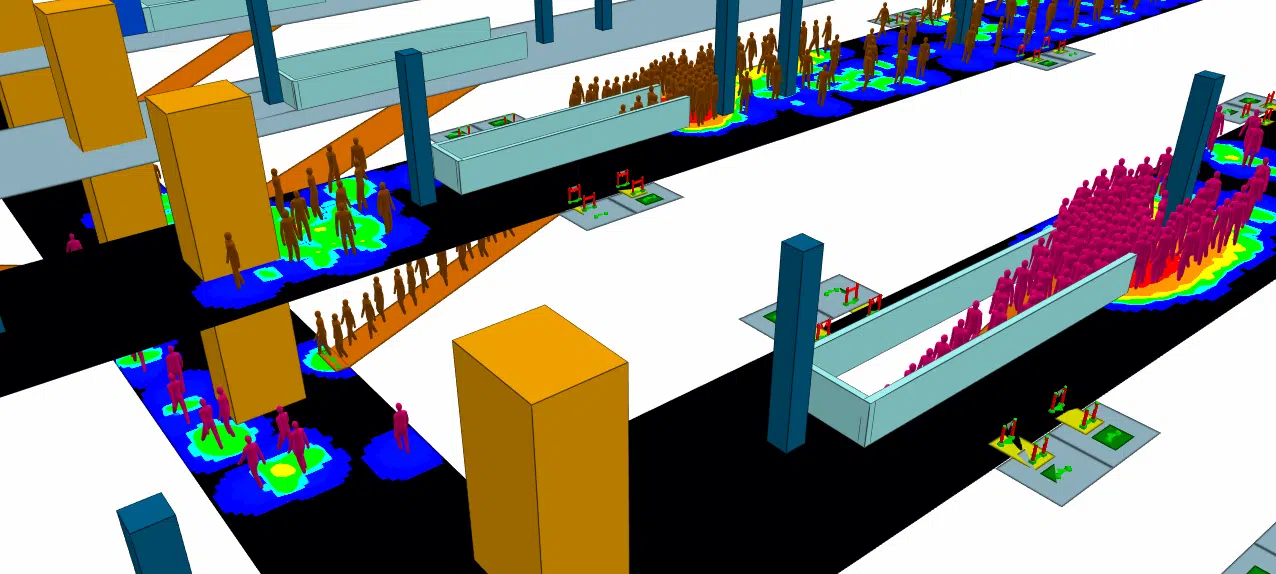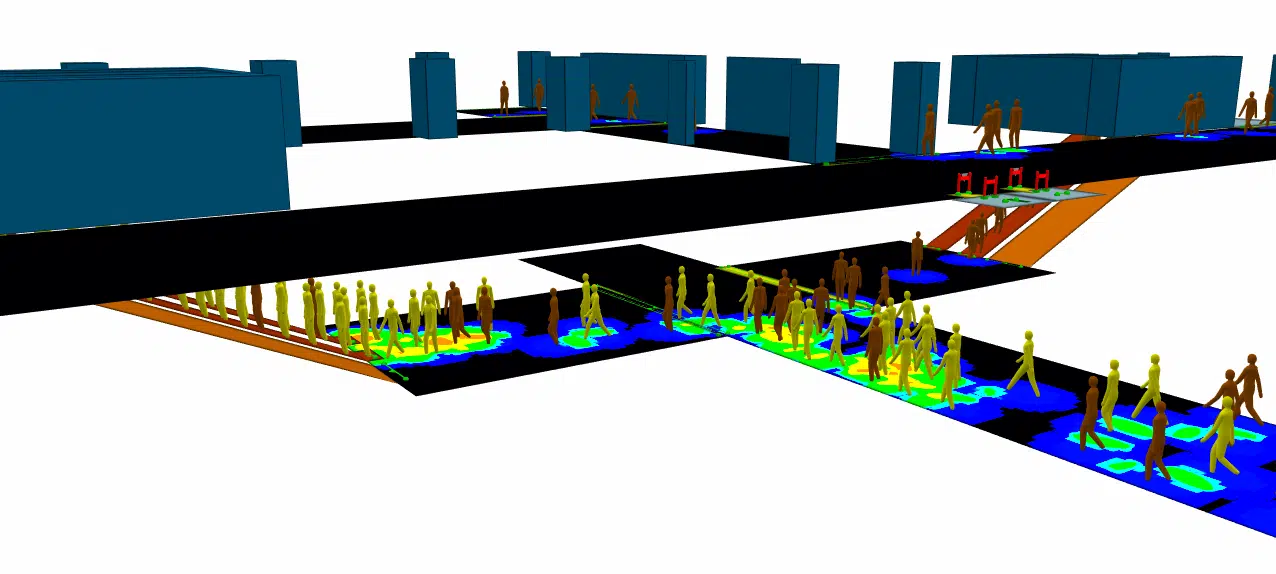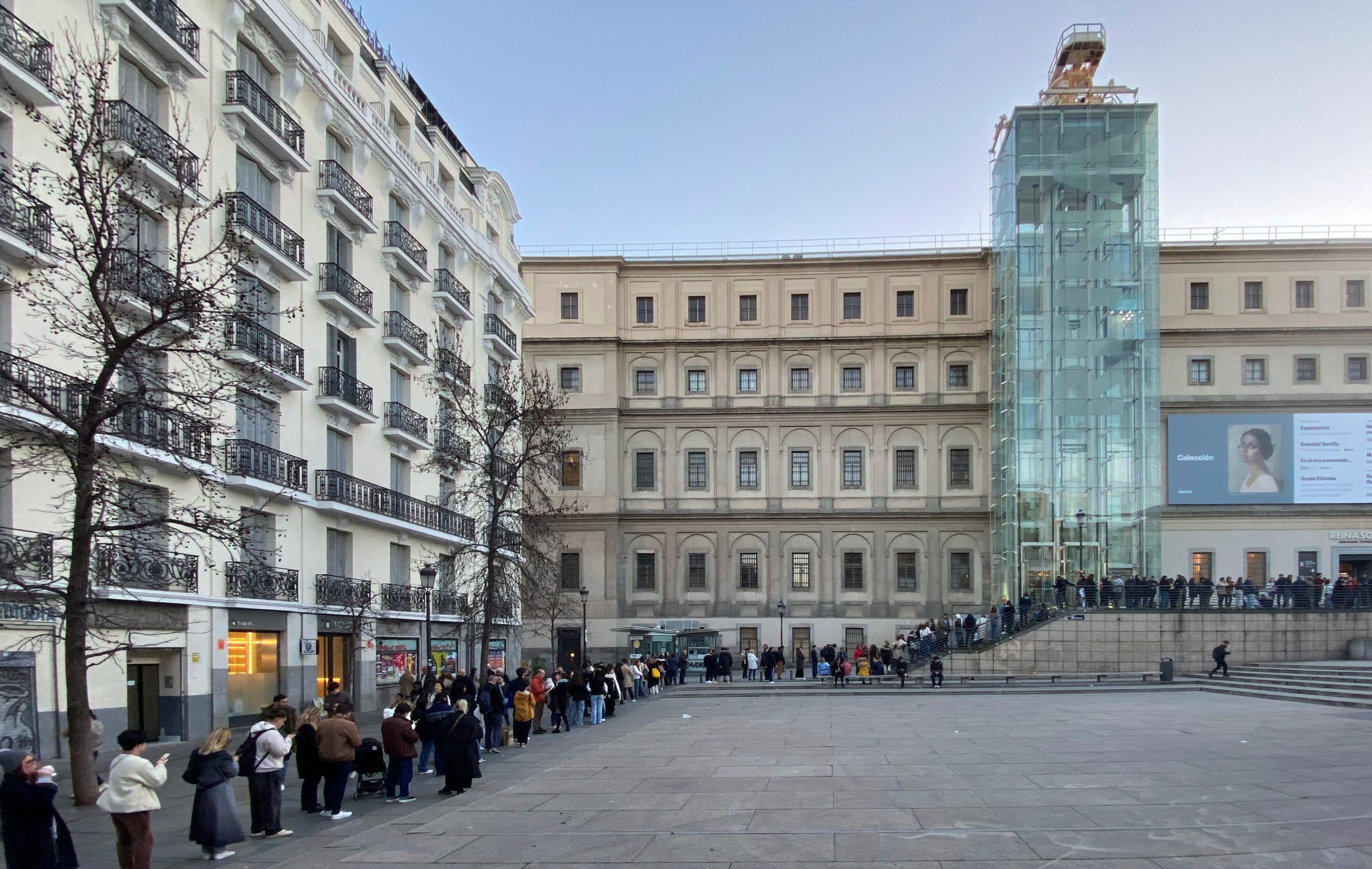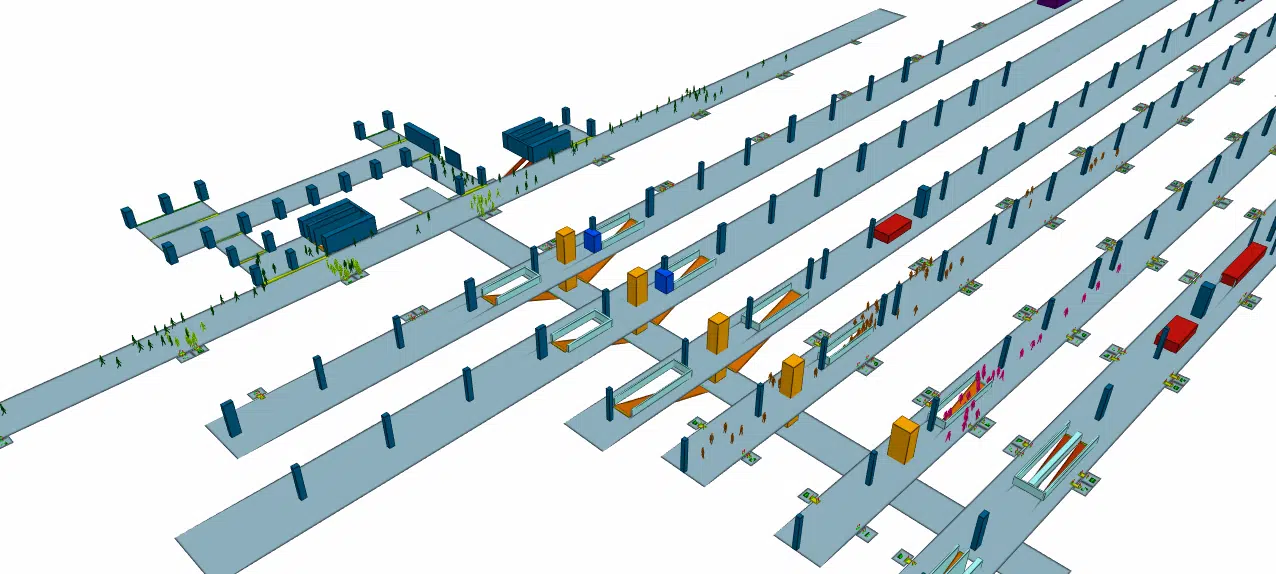
When designing buildings, there are two main areas that are of high importance, one being relevant pedestrian flows in buildings like shopping centres, stadiums, theatres, the second being people transfer in buildings like stations and airports. ESTECO, in partnership with LIFT (Railway and Traffic Engineering Laboratory S.r.l.), studied a prominent railway station node in Rome, for its specific characteristics: a high volume of arriving and departing pedestrian flows and interchanging flows amongst different railway passenger services operating on various platforms. By using pedestrian experience design software Oasys MassMotion, alongside the optimisation tool modeFRONTIER, developed by ESTECO and according to LIFT expertise in the transport field, the designers were able to optimally size pedestrian transit spaces.
By using MassMotion alongside modeFRONTIER, the designers managed to combine pedestrian microsimulation with an optimisation procedure to search for the optimal space of two identified station bottlenecks while guaranteeing a specific level of service performance.
The four-step approach provides a fast and flexible way to optimise pedestrian experience at the design stage.
Create | Simulate | Analyse | Revise
Create
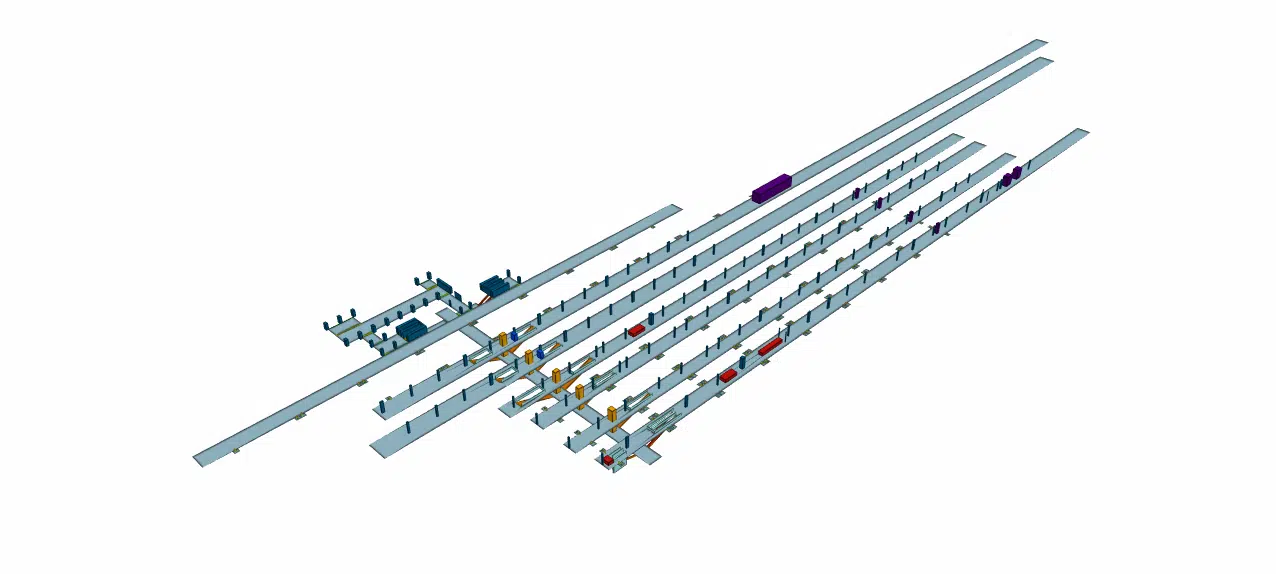
The model was created from scratch in MassMotion using the user interface. Thousands of simulations were run and the same model was used for each simulation run whilst modeFRONTIER was used to change the input parameters each time.
Simulate
More than 5000 simulations were run in parallel on four virtual machines, each of them dedicated to a single run of the corresponding MassMotion model, created using the different values of input parameters. The integration of the two tools enabled for the automatic exploration of a variety of infrastructural configurations and traffic conditions in less than 10 hours. This saved time as the manual launch of all corresponding simulations would have required several days of work.