As part of our Oasys 50 celebrations, we're looking back at the people whose expertise, creativity and dedication helped shape the software used by engineers around the world today.
For Arup fellow and geotechnical engineer Jack Pappin, that contribution came through the continued evolution of the Oasys geotechnical suite during the late 1980s and early 1990s, a period when engineering software was becoming more capable, more accessible and significantly more user friendly.
Transforming geotechnical tools for everyday engineers:
During his time with Oasys, Jack worked on major upgrades to several geotechnical programs, including Oasys Frew, Oasys Alp, Oasys Slope, Oasys Stawal and Oasys VDisp (which later evolved into Oasys PDisp). VDisp held particular significance, as it was a program Jack had originally developed in 1980 before later modernising it as part of the wider geotechnical suite.
At the time, development was carried out using DOS-based programming languages. Creating software that engineers could use efficiently required much more than producing accurate calculations. User experience, graphical outputs and clear reporting were becoming increasingly important.
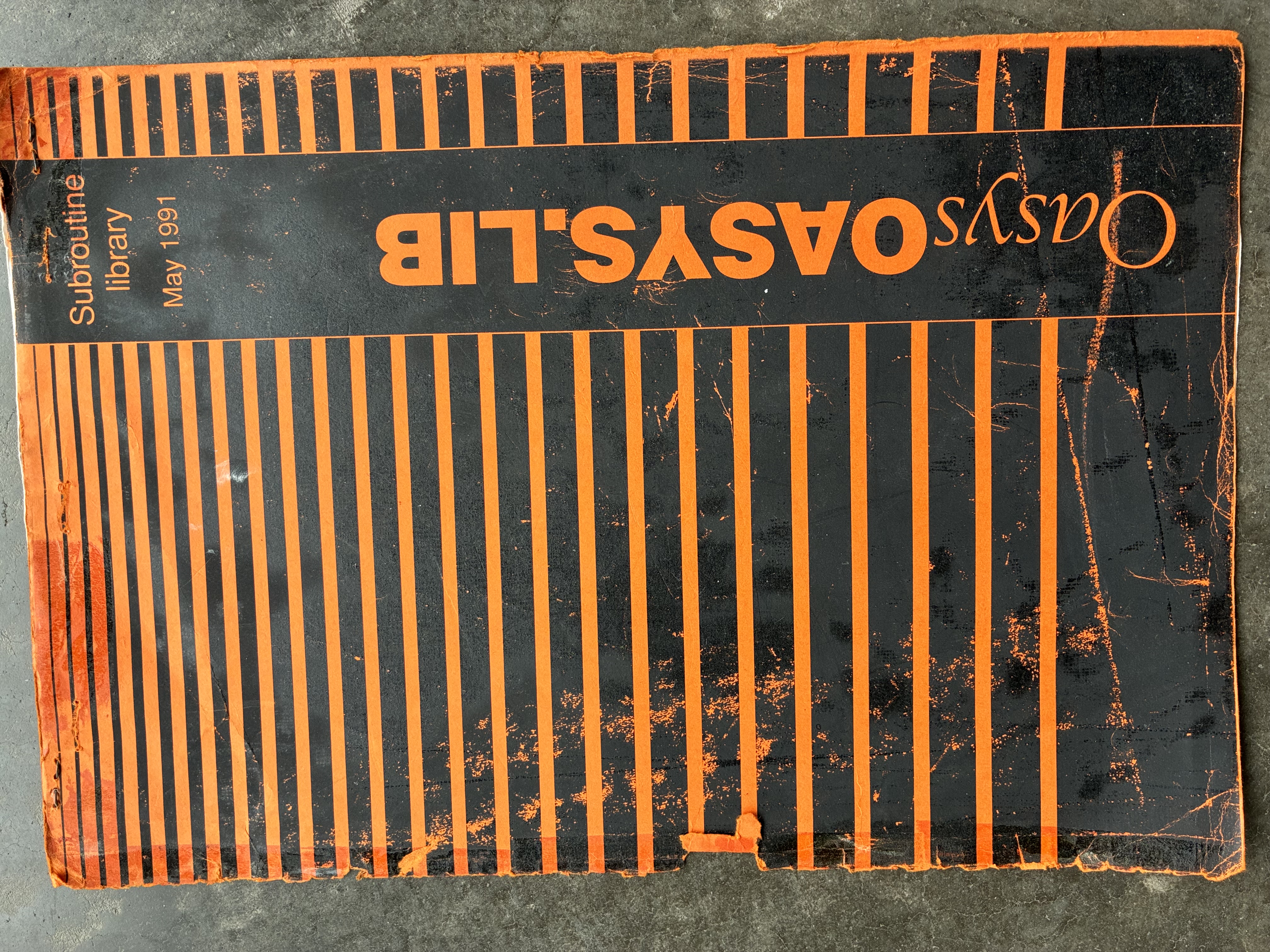
To achieve this, developers relied heavily on OASYS.LIB - "the brainchild of the brilliant man, David Croft, who was a director of Oasys in No. 8 Fitzroy St at the time", as Jack states. "IBM laptops started to be generally available in the late 80’s which enabled people to write and edit their own reports but didn’t help with doing analysis much. That had to wait for the DOS programs to be menu driven which OASYS.LIB enabled."
Expanding into earthquake engineering
Alongside his work on the geotechnical programs, Jack explains that he enjoyed developing the seismic analysis programs: " I also had great fun developing the seismic programs SISMIC for probabilistic seismic hazard analysis and SIREN for dynamic non-linear site response analysis."
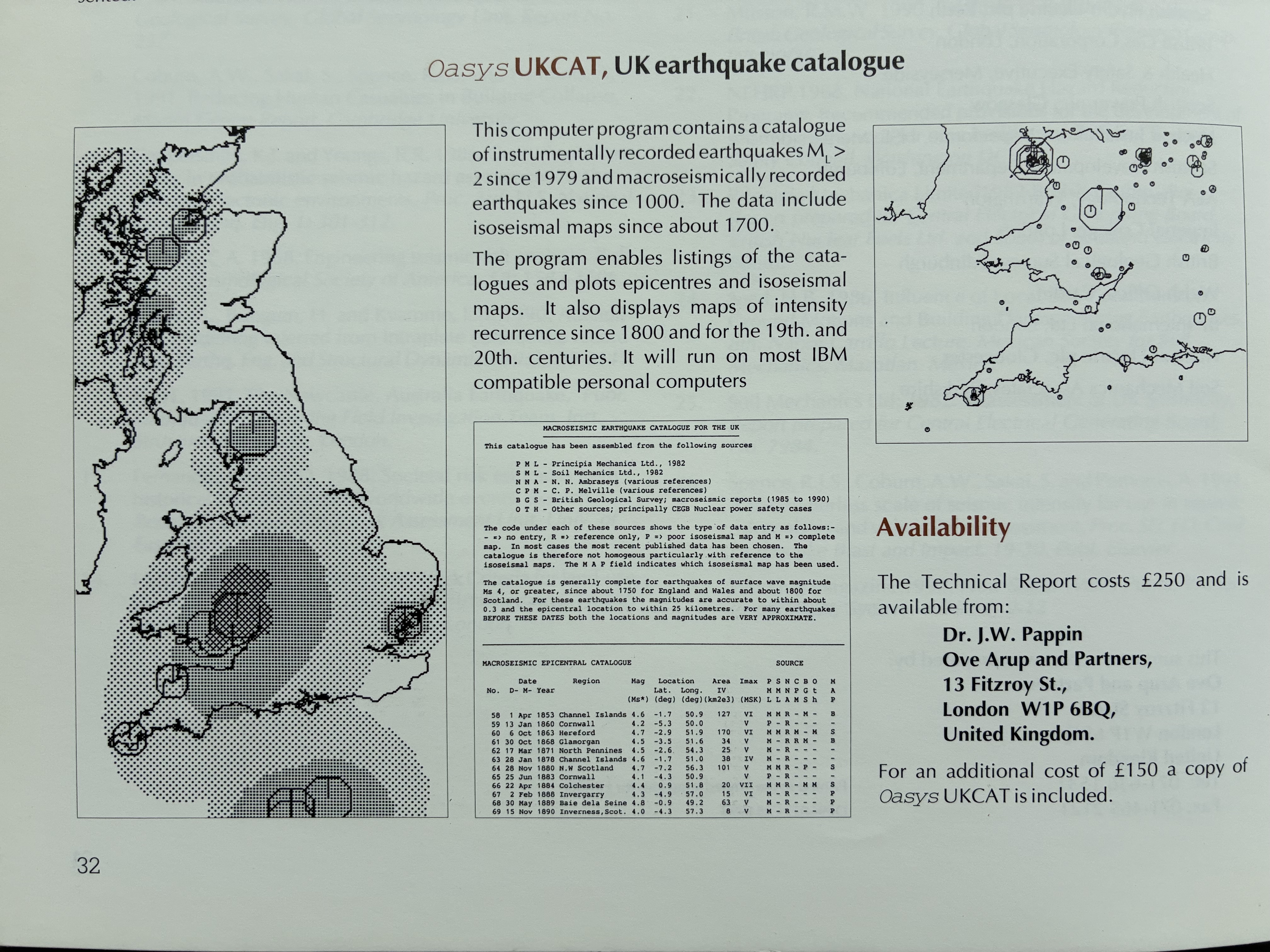
He also worked on the development of UKCAT, a UK earthquake catalogue program that provided graphical displays of seismic data for a DOS based program.
Reflecting on the work, Jack remembers the projects as both technically challenging and immensely enjoyable, combining engineering expertise with emerging computing capabilities.
Supporting the next generation of engineers
One initiative Jack is especially keen to remember the beginning of is Oasys UNIPAC, engineering software packages designed for students and educational institutions. Through UNIPAC, Oasys made the geotechnical software available to universities, enabling engineering students to learn using the same tools being adopted in professional practice.
This reflects an ambition that remains central to Oasys today: making advanced engineering analysis more accessible and helping future engineers build confidence with industry-leading tools.
A lasting contribution
From enhancing core geotechnical applications and pioneering seismic analysis software to supporting engineering education, Jack's work helped expand both the capabilities and reach of Oasys software during a formative period in its history.
Stories like Jack's remind us that the success of Oasys has always been driven by engineers who saw opportunities to solve complex problems and improve the tools available to the profession. As we celebrate 50 years of Oasys, we're proud to recognise the people whose expertise and innovation helped shape the software we continue to develop today.
We'd like to thank Jack Pappin for sharing his memories and helping us celebrate 50 years of Oasys.