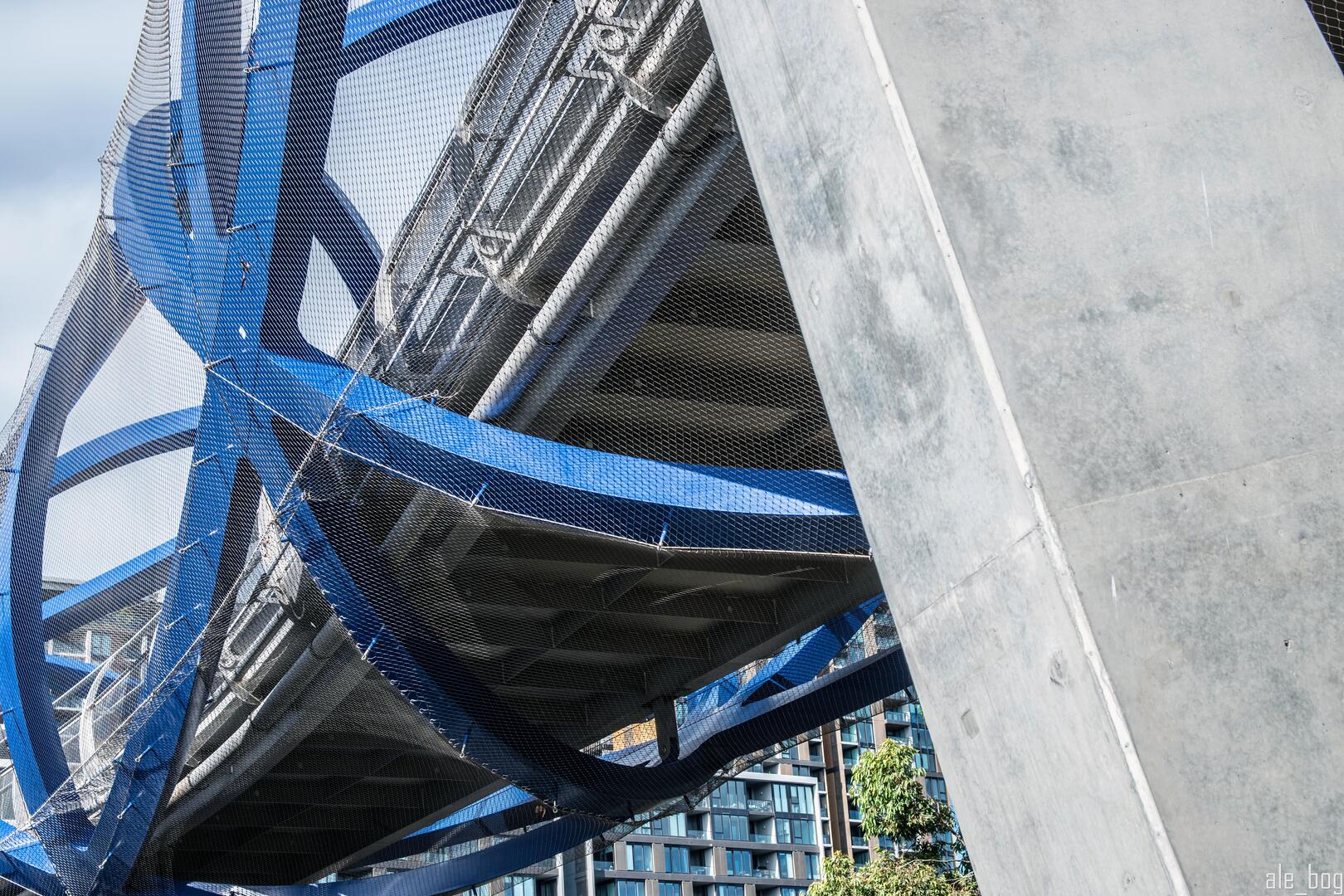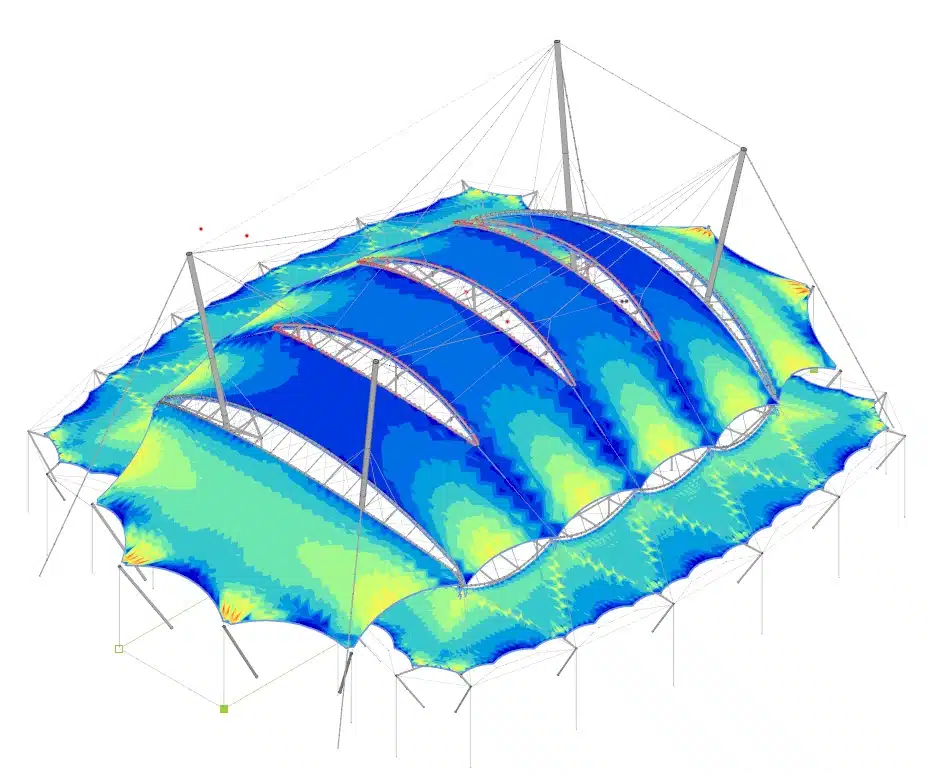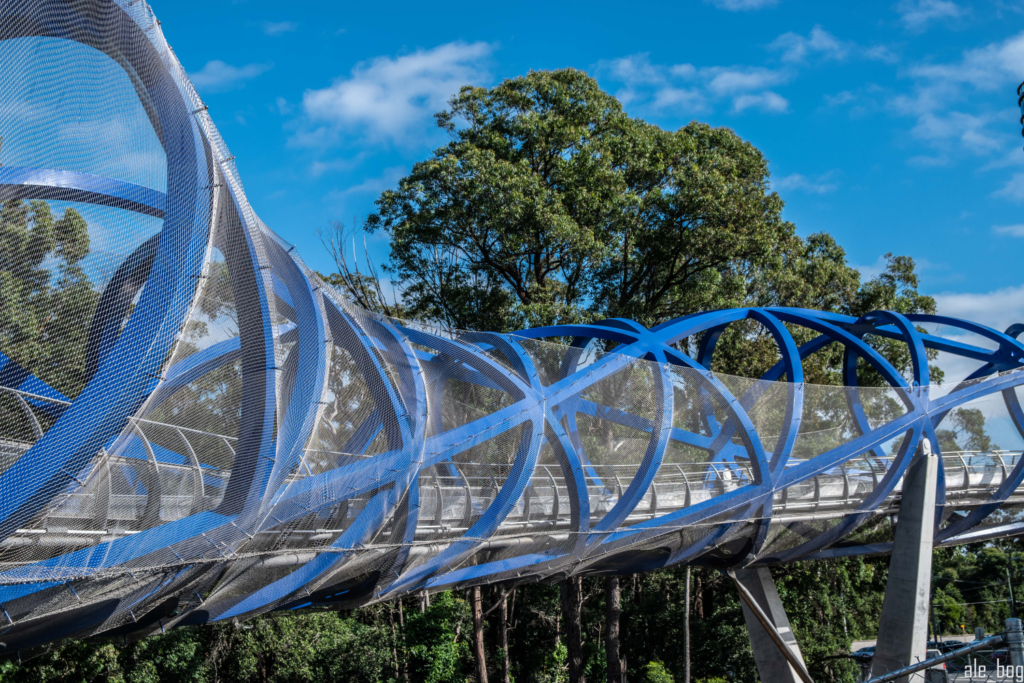
The digital engineering-led approach to the project from concept to completion of this unique ‘double helix’ bridge in Sydney, Australia, has delivered a successful structure that has really hit the sweet spot between form and function. Is it a piece of art in the city, or is it a beautiful showcase of engineering? Why not both? The bedrock of the design process was robust structural analysis by Oasys GSA, used in conjunction with a range of software tools, all BIM compatible and readily interoperable. It enabled engineers to evolve a more fluid shape and to overcome site-specific space constraints and geotechnical challenges.
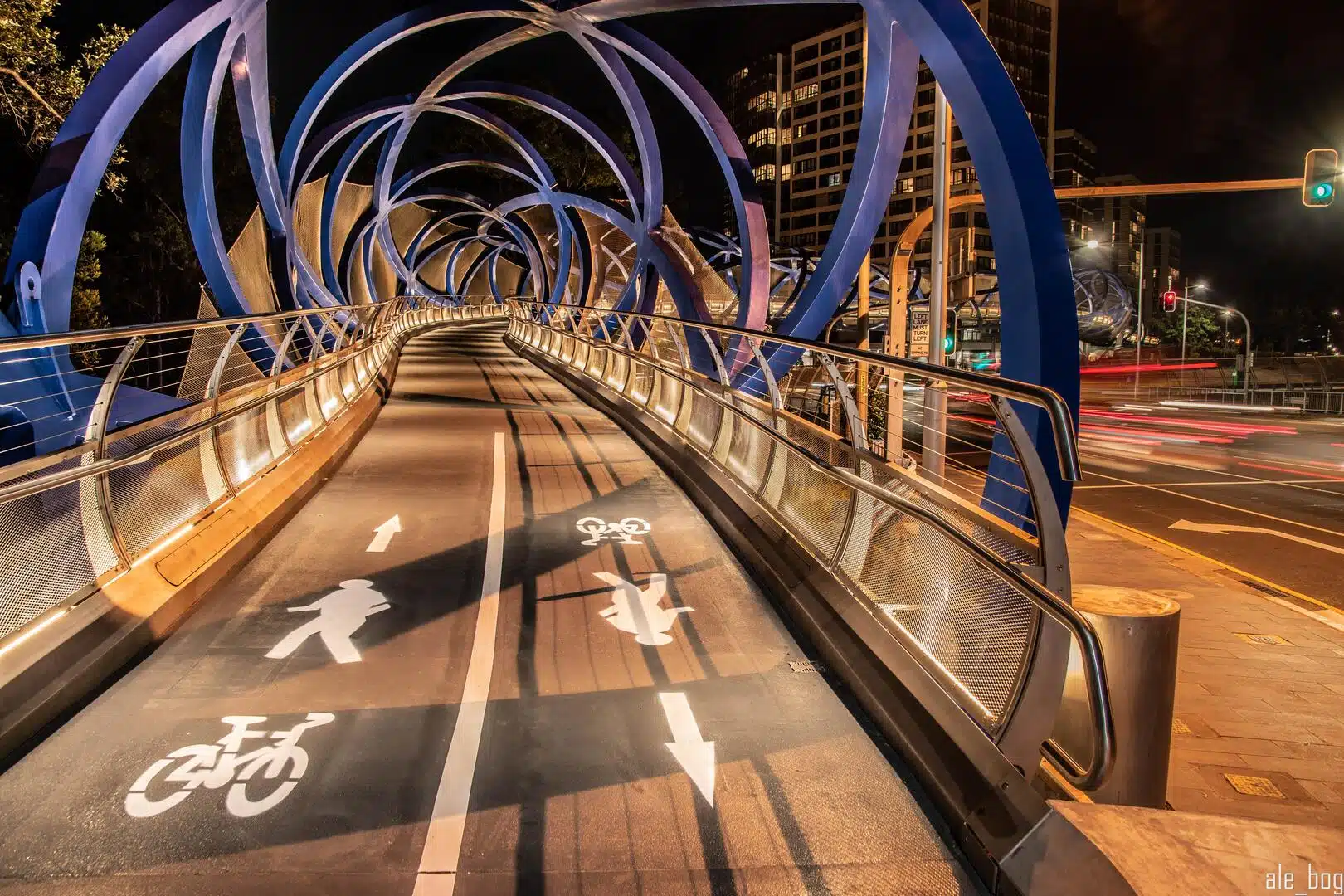
As well as sheer beauty, the irregular helical geometry met the practical requirements to safely connect two areas previously separated by a junction. This allowed the regeneration of a brownfield site plus a whole new city district to be brought to life. The distinctive blue bridge now provides safe and easy pedestrian and cyclist access to the city rail network for residents of the new Lachlan’s Line urban village.
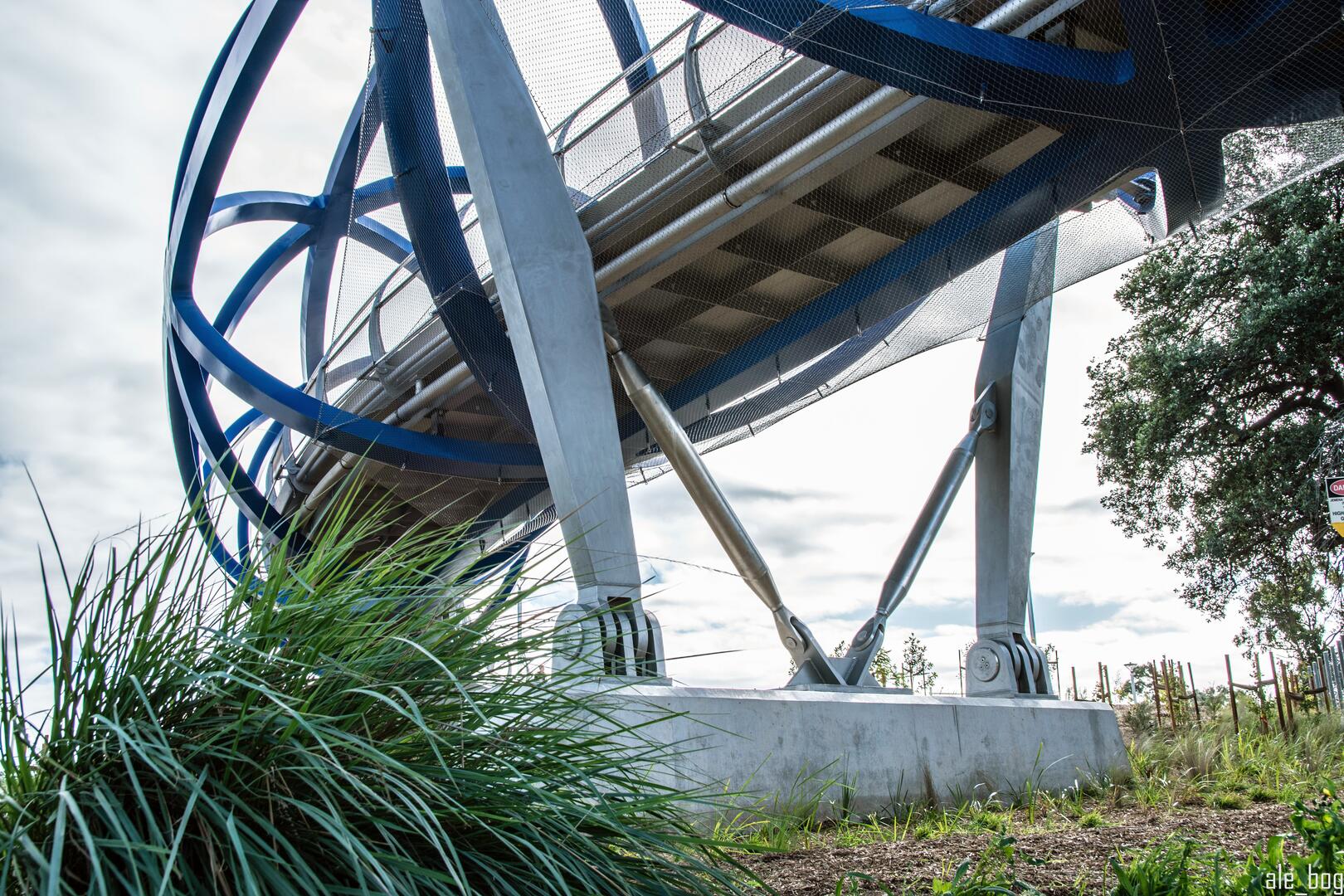
The striking 178m long structure is believed to be the first of its kind in the world. Basically, the helix is a tubular truss and the deck sits inside without doing any spanning work. The truss dimensions follow structural demand, so it is deeper over the supports where the bending moments of the beam are higher and shallower at mid span where the moments are lower. In this GSA-optimised design, the diameter of the truss varies from 5.5m to 7.8m.